 01706 753 636
If ever there was a ‘once-in-a-lifetime’ destination… this is it! Japan consistently features in our clients’ travel wish lists, and saw huge demand in 2025, with many tours and hotels fully booked well ahead of time. With 2026 already looking even busier, if you’re keen to go, make sure you plan early.
Known as the ‘Land of the Rising Sun’, Japan promises ancient temples, neon-lit futuristic cities, geological wonders, incredible cuisine, a fascinating culture and captivating architecture.
From Tokyo’s bustling streets to Kyoto’s zen temples, Mount Fuji’s photogenic peaks, and Osaka’s street food we’ve cherry-picked our best bits of Japan just for you…(plus a few of our favourite South Korean gems thrown in too!) and if this leaves you wanting to find out more, simply get in touch with our team who’ll be delighted to help you craft your own personalised multi centre holiday to Japan.
• Tokyo – Neon lights and ancient temples.
• Hakone – Hot springs, lake cruises and Mount Fuji views.
• Shizuoka – Tea plantations & Mount Fuji.
• Kanazawa – Beautiful gardens, samurai districts and geisha culture.
• Osaka – Famous street food and buzzing nightlife.
• Hiroshima – Moving history, memorials and a symbol of peace.
• Miyajima – The iconic floating torii gate and scenic island views.
• Kyoto – Temples, bamboo forests, and timeless Japanese culture.
• Nikko – UNESCO-listed shrines surrounded by mountains and waterfalls.
• Okinawa – Tropical beaches and crystal-clear waters.
• Fukuoka – Vibrant markets, shopping districts and famous Hakata ramen.
With an infectious energy, Tokyo is a city where old meets new, and a public transport system that runs like clockwork, making it easy to get out and explore its wealth of cultural activities and landmarks.
A great place to start is Asakusa, home to Sensō-ji, Tokyo’s oldest temple. Begin at the Kaminarimon, or ‘Thunder Gate,’ with its iconic lantern and statues, then wander down Nakamise-dori, a bustling street of traditional stalls and street food. At Sensō-ji, explore the main hall, five-storey pagoda, shrine, and beautiful gardens. Elsewhere across the city, other historic landmarks to visit include Meiji Shrine, Tsukiji Hongan-ji, Zojoji, Nezu Shrine, and the Imperial Palace, including its East Gardens. And to experience traditional performance art, watch a Kabuki show at the famous Kabuki-za Theatre in Ginza.
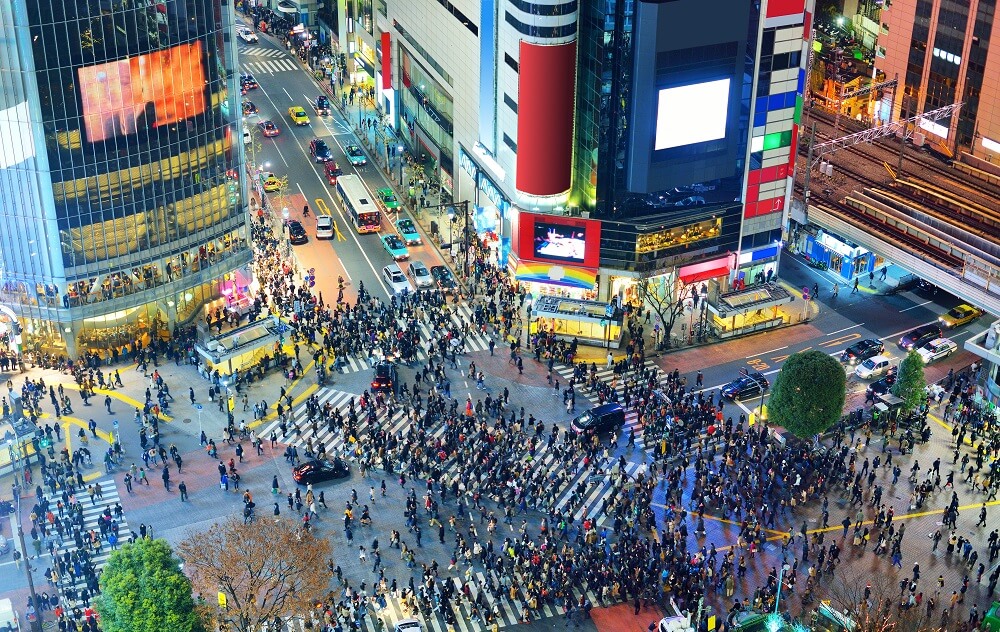
Shibuya Crossing, one of the world’s most famous pedestrian intersections, is another must-see, especially at rush hour. The surrounding area is packed with shops, restaurants, nightlife, and entertainment, and it’s a perfect spot to soak up Tokyo’s energy.
Tokyo is also a food lover’s paradise. Whether it’s fresh sushi at Toyosu Market, Harajuku street food, or traditional kaiseki or ramen. Many ‘koshitsus’ also offer private dining with tatami mats, low tables, and sliding screens.
If you love a spot of shopping, you won’t be disappointed in the opportunities on offer, including the luxury boutiques in Ginza, the tech and electronic paradise of Akihabara and the unique and trendy shops in Harajuku’s Takeshita Street.
For the most spectacular views of the city, head to the Tokyo Skytree, Tokyo Tower, Shibuya Sky’s rooftop deck, or the observation decks of Mori Building’s Roppongi Hills to take in the full panorama of the city, especially during sunset.
Situated just 80km from Tokyo but a whole world away from the fast-paced lifestyle of the capital, Hakone is a region famous for its hot springs (onsen). These geothermal springs are believed to have healing properties, perfect for some downtime. The onsen experience often involves immersing yourself in an open-air bath while surrounded by lush greenery or even snow-capped mountains, depending on the season.

Hakone is also a great place to catch some stunning views of Mount Fuji. A lovely way to view the mountain is by taking a boat cruise on Lake Ashi, where you enjoy the scenic surroundings and, on clear days, catch a glimpse of Mount Fuji in the background. Another way to take in Hakone’s beauty is aboard the Hakone Ropeway, which is an aerial tramway that takes you high above the region, offering sweeping views of the surrounding mountains, valleys, and Lake Ashi.
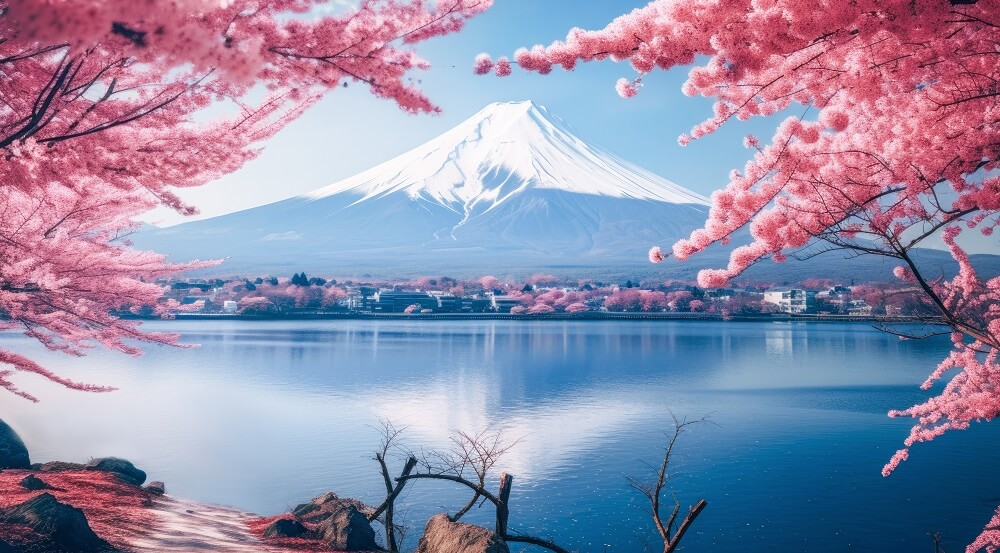
Located southwest of Tokyo is the region of Shizuoka, home to the huge Mount Fuji, which straddles the border between Shizuoka to the east and Yamanashi to the west. Whether you choose to climb the mountain via the walking trails (possible in the summer months) or simply admire it from afar, it’s a truly breathtaking sight. There are plenty of places to catch a magnificent view of Mount Fuji, one of them being from Miho no Matsubara beach. On clear days, the peak of the mountain is perfectly reflected in the calm waters of the Suruga Bay, creating a postcard-perfect image.
One of Shizuoka’s other claims to fame is its tea production, particularly its green tea. A visit to a tea plantation lets you stroll through lush, meticulously maintained fields, learn about cultivation and harvesting, and enjoy a traditional Japanese tea ceremony.
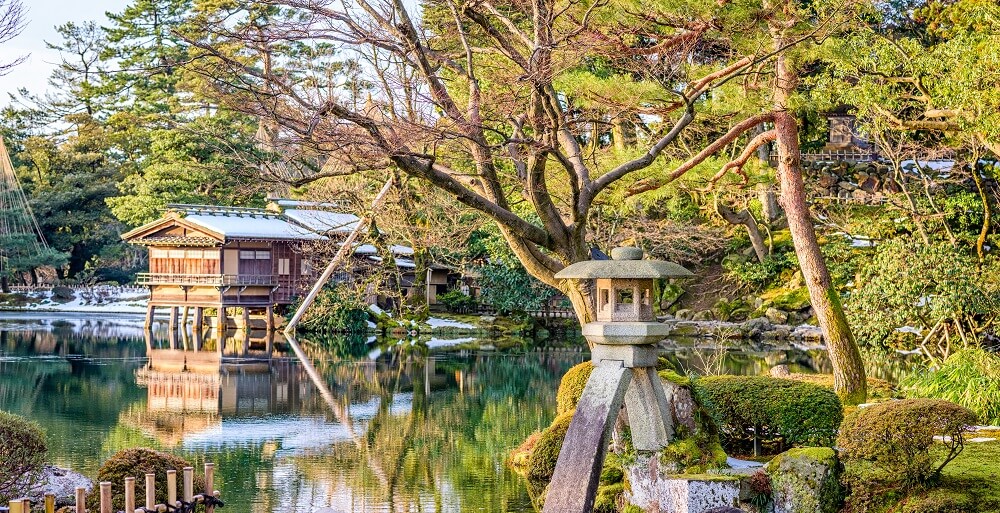
Kanazawa is located on the western coast of Japan, and one of its main highlights is the meticulously landscaped Kenrokuen Garden, renowned as one of the three best gardens in Japan. The garden’s name, ‘Kenrokuen’, translates to the ‘Six Attributes Garden,’ symbolising the six essential qualities of a perfect garden: spaciousness, seclusion, artificiality (i.e. deliberate design), antiquity, use of water, and panoramic views.
Beyond the garden, Kanazawa is known for its geisha areas and also samurai districts. In Higashi-Chaya, you can step inside traditional tea houses and soak up geisha culture, while in Nagamachi, winding streets and samurai homes offer a chance to see how samurai lived and how their homes were built. The city is also famous for its craftsmanship, especially gold leaf – in fact, most of Japan’s is made here, and it’s used in everything from temple decorations and traditional crafts to sweets and sushi.
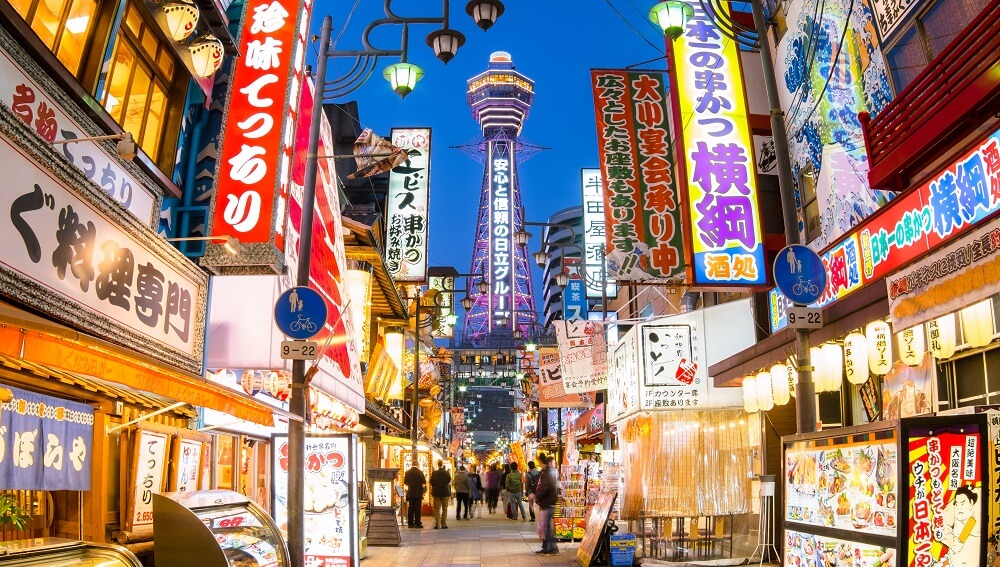
Osaka is often referred to as Japan’s ‘Kitchen’ and is a city where you can indulge in some of the country’s most delicious food and culinary delights. Start your culinary journey in Dotonbori, known for its neon lights and mouth-watering street food stalls. Try the iconic takoyaki, octopus balls or sample okonomiyaki, a savoury pancake. You will also find numerous restaurants that specialise in fugu dishes (puffer fish). The most popular way to enjoy fugu in Osaka is in the form of thinly sliced sashimi, known as ‘fugu sashimi’ or ‘fugu sashimi moriawase.’ Preparing fugu is a highly specialised and regulated skill (due to the potential of poisoning) and requires rigorous training and certification by fully licensed chefs who undergo years of apprenticeship to master the art of fugu preparation while ensuring the safety of their customers. Because of this, the chefs may demonstrate their expertise by preparing the fish next to your table – creating a real sense of theatre around the food.
Beyond its culinary fame, Osaka boasts a rich history, with the magnificent Osaka Castle taking centre stage against the modern skyscrapers. While the original castle was destroyed in the 17th century, the current structure is a meticulous reconstruction that offers wonderful views of the city. You can also explore the museum inside the castle, which houses an impressive collection of artefacts and historical displays. Surrounding the castle, there are some beautiful grounds which offer a peaceful escape from the city and also a great spot in cherry blossom season in spring.
For a taste of modern Osaka, head to Grand Front Osaka. This new development boasts one of the world’s largest parks connected directly to a major station, along with Time Out Market Osaka, where you can sample some incredible street food, and plenty of shops.
Osaka is also home to Universal Studios Japan, with the newly expanded Super Nintendo World and Donkey Kong Country area, plus the Wizarding World of Harry Potter.
Hiroshima is most famously known as the site of the atomic bombing during World War II, and the city’s Hiroshima Peace Memorial Park and Museum serve as a poignant reminder of the devastating consequences of this.
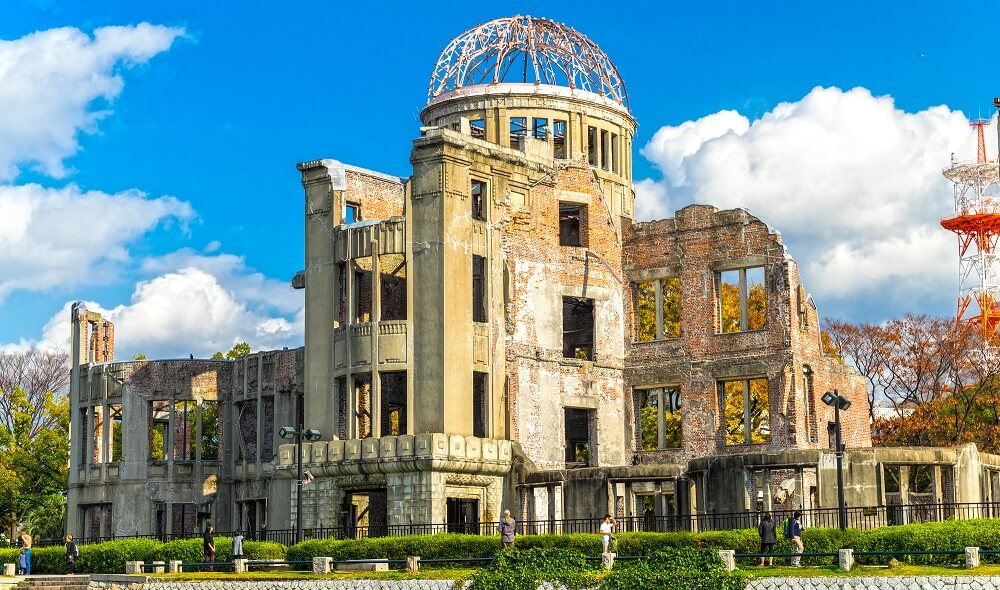
At the heart of the park lies the Hiroshima Peace Memorial, commonly known as the Atomic Bomb Dome. This iconic structure, which miraculously survived the blast, stands as a haunting silhouette against the city’s modern skyline. Also situated in the park is the Hiroshima Peace Memorial Museum, where you can explore exhibits detailing the events leading up to the bombing, the immediate aftermath, and the long-term effects on survivors (known as hibakusha). It’s a fascinating place with personal artefacts, photographs, and testimonies.
The Hiroshima Peace Boulevard, or Heiwa-dori, is a tree-lined avenue leading from the Peace Memorial Park to the Atomic Bomb Dome, where you’ll find statues, monuments, and memorial stones donated by countries and organisations from around the world.
Nestled in Hiroshima Bay and accessible via a short ferry ride from the city, is the beautiful Miyajima Island.
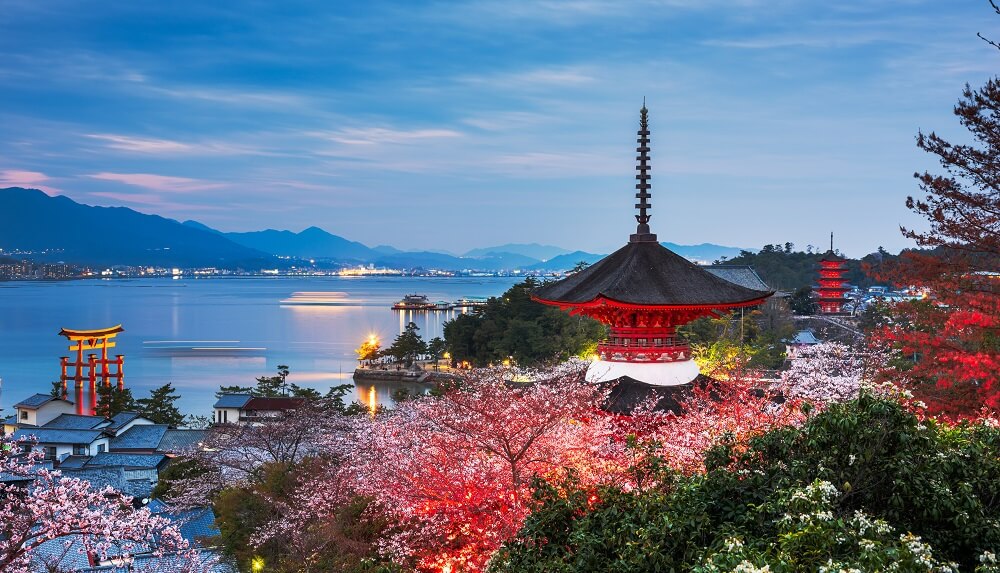
The island’s most iconic structure is the Itsukushima Shrine, whose Torii gate is possibly one of Japan’s most photographed locations. The huge red coloured ‘Great Torii’ entrance gate to the shrine, a UNESCO World Heritage site, appears to magically float on the surface of Hiroshima Bay and is truly an unforgettable sight. Beyond the shrine, Miyajima Island is also known for its dense forests that offer numerous walking trails where wild deer roam freely, leading to panoramic viewpoints such as Mount Misen, where you are rewarded with an incredible view of the Seto Inland Sea.
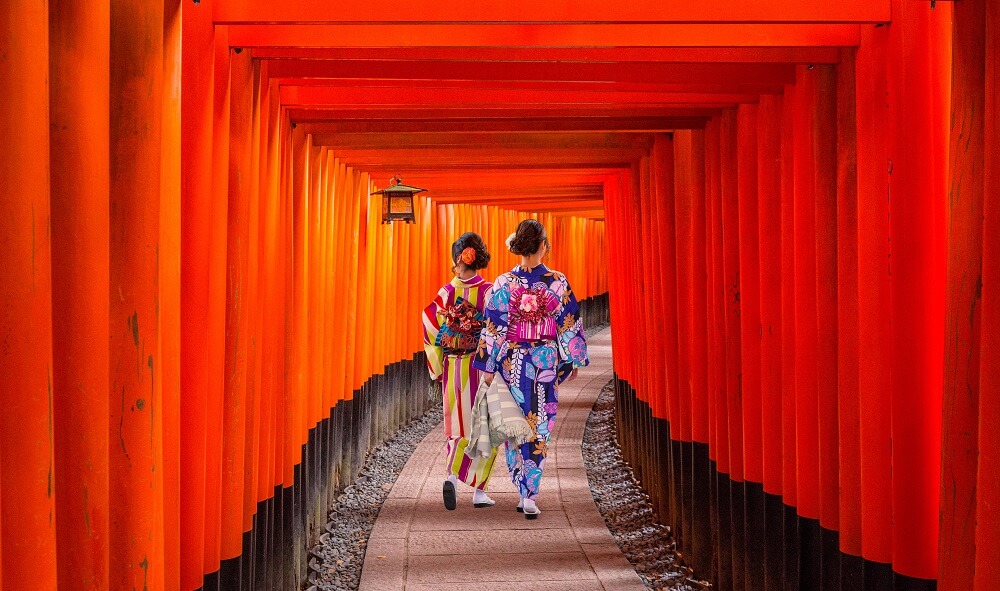
Kyoto, often referred to as the cultural heart of Japan, boasts traditional architecture and historic temples. Fushimi Inari Shrine, dedicated to Inari, the Shinto god of rice, is one of Kyoto’s most iconic landmarks, located at the base of Inari Mountain. The shrine features thousands of red/orange torii gates that create a winding path through the forested hillside. The Ryoan-ji Temple is also a must-visit destination and a truly peaceful retreat. This Zen Buddhist temple is famous for its rock garden, which consists of 15 carefully placed rocks surrounded by raked gravel, which are meant to encourage contemplation and meditation. Located in the western outskirts of Kyoto, the Arashiyama Bamboo Grove is a natural wonder and a must-visit destination in Kyoto. Walking through the forest of tall bamboo stalks is a truly immersive experience and is also located near other attractions such as the beautiful Tenryu-ji Temple and the scenic Arashiyama Monkey Park.
Aside from stunning temples, Kyoto is famed for its tea culture and sake production, with numerous traditional tea houses throughout the city that specialise in tea ceremonies, and also multiple places to enjoy sake tasting experiences at local breweries. (Don’t forget to raise your glass and say ‘kanpai’ as you enjoy the sake!). The region is also the birthplace of Nintendo, so if you’re a gaming fan, pop over to the Nintendo Museum in nearby Uji. It’s where the brand was founded and is a fun, interactive experience.
Nikko, nestled within the Tochigi Prefecture, is home to the UNESCO World Heritage site known as the ‘Shrines and Temples of Nikko’. This includes Futarasan Shrine, Rinno-ji Temple and the most famous – the magnificent Toshogu Shrine, which is an architectural masterpiece dedicated to Tokugawa Ieyasu, the founder of the Tokugawa shogunate. The shrine complex features exquisite wood carvings, elaborately decorated structures, and the iconic Three Wise Monkeys.
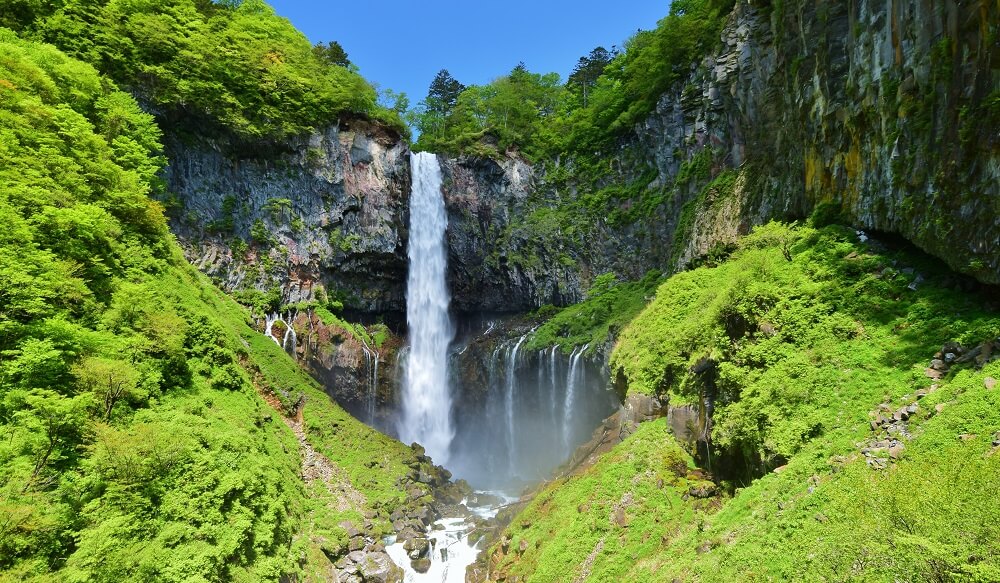
Also within the UNESCO site is the Nikko National Park, where the breath-taking Kegon Falls takes centre stage with its cascading waters that drop 97 metres into the beautiful Lake Chuzenji.
The tropical haven of Okinawa is a beautiful region in the southernmost part of Japan and is ideal for a relaxing beachside break – thanks to its array of pristine beaches both on the main Okinawa Island and also on its neighbouring islands.
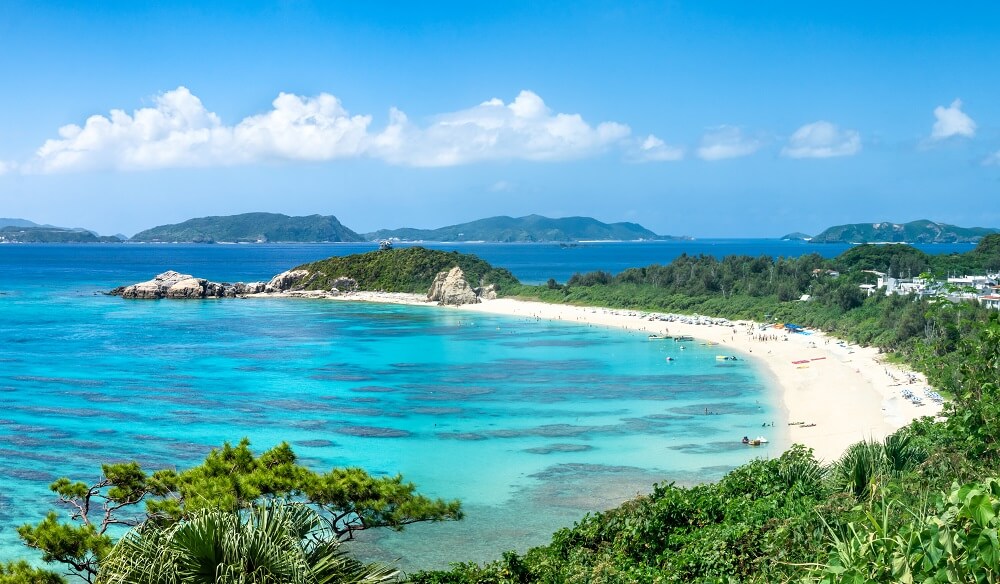
One of the most popular spots is Onna Village, situated along the picturesque western coast of Okinawa Island. Onna Village offers powdery sandy beaches and upscale beachfront luxury resorts, perfect for some R&R. Also, take a trip to Kouri Island, which is famed for its crystalline waters, Kouri bridge and heart-shaped rock formation that is meant to bring luck to couples. Another highlight is the remote and untouched Nishihama Beach, located on Hateruma Island. This hidden gem has incredibly fine white sands and is the perfect spot to explore the vibrant coral reefs just off its shores.
Fukuoka, located on the northern coast of the island of Kyushu, is an important link for travel from Japan across to South Korea. It’s a large, buzzing city that is growing rapidly and becoming more of a tourist hotspot thanks to its art scene, culture, shopping and fabulous cuisine.
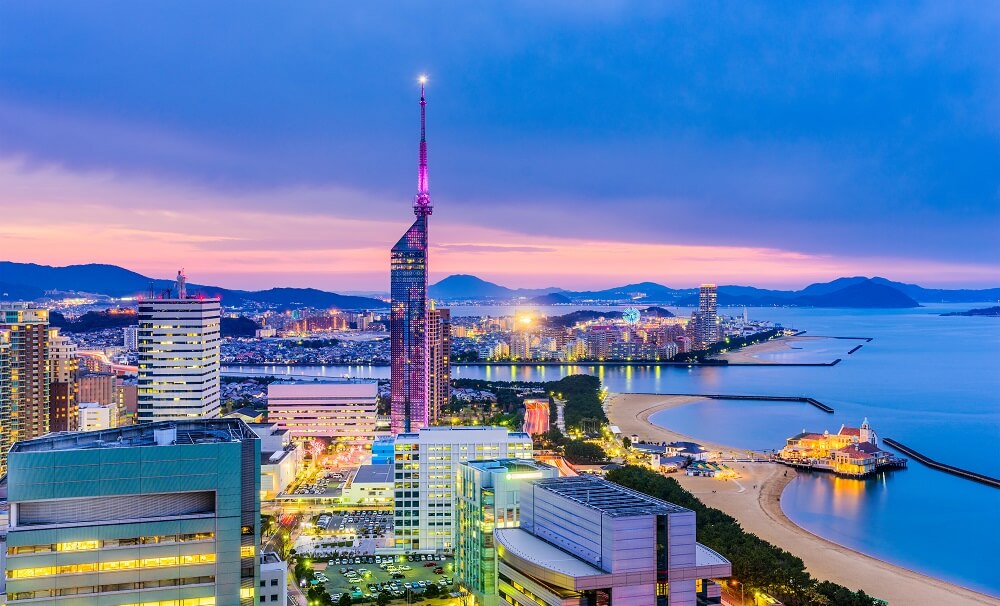
Start your exploration in the Tenjin district, for a great selection of shopping, entertainment and gastronomic delights. Here you’ll find department stores, boutiques, and quirky shops and also a vibrant dining scene, with numerous restaurants offering a variety of cuisines, from traditional Japanese to international food. Nakasu-Kawabata, which is located near the Naka River, is famous for its lively yatai (open-air food stalls), where you can enjoy delicious street food and local specialities, including Fukuoka’s signature dish, Hakata ramen. This noodle soup features thin, straight noodles served in a rich pork bone broth. For a spot of history, head to the ruins of Fukuoka Castle, where you can explore the impressive stone walls and remaining turrets, which are particularly lovely during cherry blossom season.
Start your exploration in the Tenjin district, for a great selection of shopping, entertainment and gastronomic delights. Here you’ll find department stores, boutiques, and quirky shops and also a vibrant dining scene, with numerous restaurants offering a variety of cuisines, from traditional Japanese to international food. Nakasu-Kawabata, which is located near the Naka River, is famous for its lively yatai (open-air food stalls), where you can enjoy delicious street food and local specialities, including Fukuoka’s signature dish, Hakata ramen. This noodle soup features thin, straight noodles served in a rich pork bone broth. For a spot of history, head to the ruins of Fukuoka Castle, where you can explore the impressive stone walls and remaining turrets, which are particularly lovely during cherry blossom season.
If our travel guide has ignited your desire to embark on your own Japanese adventure, please get in touch with our team of experts. We’re here to help you create a personalised Japan itinerary that ensures you experience the very best this captivating country and beyond has to offer.
Inspired by the guide? We’ve handpicked a few holidays that bring it to life—perfect for turning travel ideas into reality.


