 01706 753 636


If you’re travelling all the way to Bali, why not make your beach escape part of a bigger adventure? A Bali multi centre holiday lets you mix cities and culture with countryside and beach in one unforgettable trip.
While Bali may be a long-haul journey, it’s the perfect opportunity to break up the trip with a stopover in a world-class city such as Singapore, where you can indulge in high-end shopping, explore iconic skyscrapers, and enjoy fine dining. Or go for the full R&R experience and combine your Bali trip with sleepier islands such as the Gili Islands, Lombok or Sumba, where pristine beaches, crystal-clear waters, and a slower pace of life provide the perfect setting to unwind in paradise. Alternatively, head for some adventure in Flores and Komodo, where you’ll find dramatic volcanic landscapes, ancient fishing villages, and the excitement of coming face-to-face with the legendary Komodo dragon.
In this guide, we explore the best destinations to combine with your Bali holiday and why they make perfect twin or multi-centre choices.
Singapore: A perfect stopover offering skyscrapers, lush gardens, fine dining, iconic views, and the classic Raffles’ Singapore Sling cocktail to top it all off.
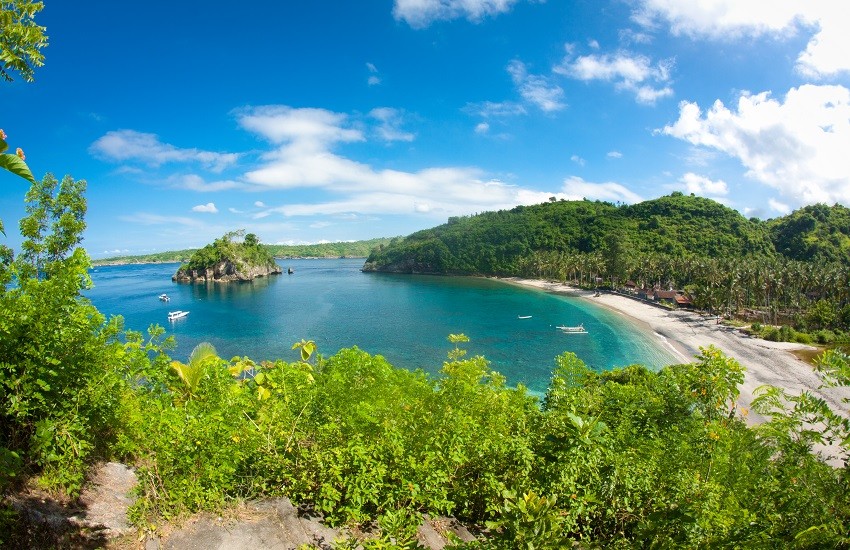
Gili Islands: Just a short hop from Bali, featuring crystal-clear waters, sensational scuba diving, and peace and tranquillity.
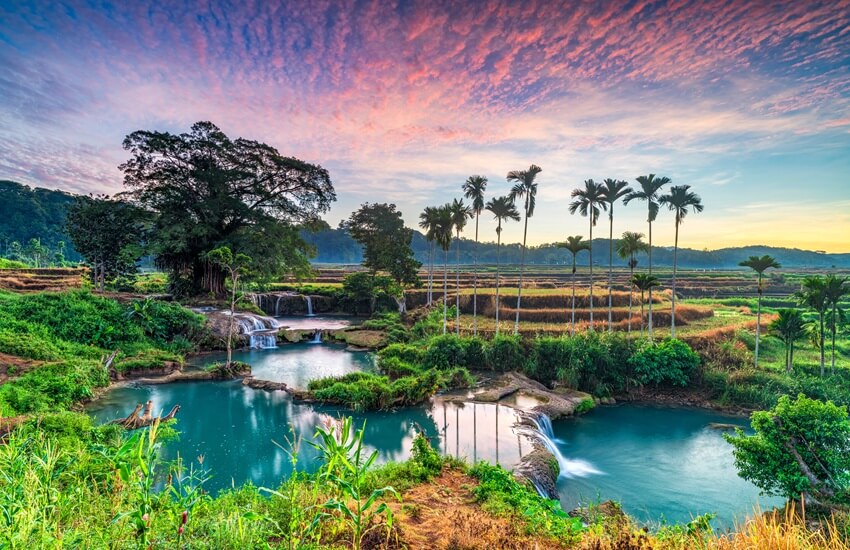
Lombok: Easily accessible from Bali, with lush jungles, stunning waterfalls, and serene beaches for the perfect escape into nature.
Flores: Great for adventurous travellers with crater lakes, highland villages, coastal views and snorkelling.
Komodo: Incredible wildlife and marine life with the famous Komodo dragons, coral reefs, manta rays and dramatic islands.
Sumba: Quiet, stunning beaches, traditional villages, waterfalls and lagoons.
Dubai: Ideal for breaking up your journey, with glossy landmarks, desert adventures, glamorous beach clubs, and indulgent brunches.
Singapore is the perfect warm-up before diving into Bali’s idyllic blue waters and laid-back beach culture. With plenty of flights and an international airport that’s a short transfer from the city, it’s a popular stopover for Bali, and indeed many other Asian destinations.
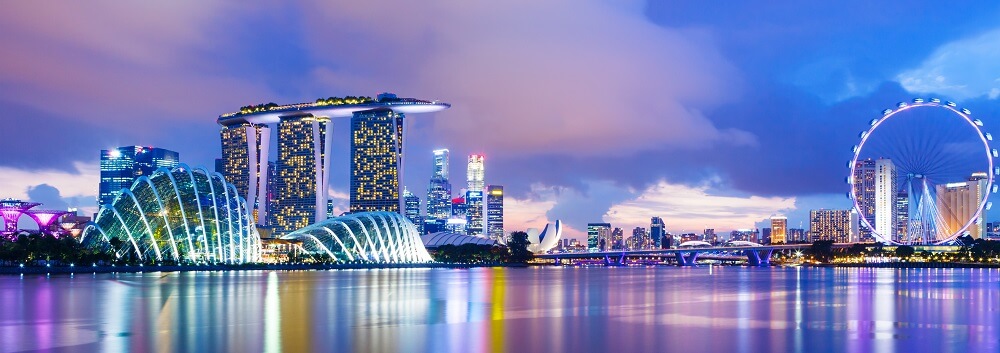
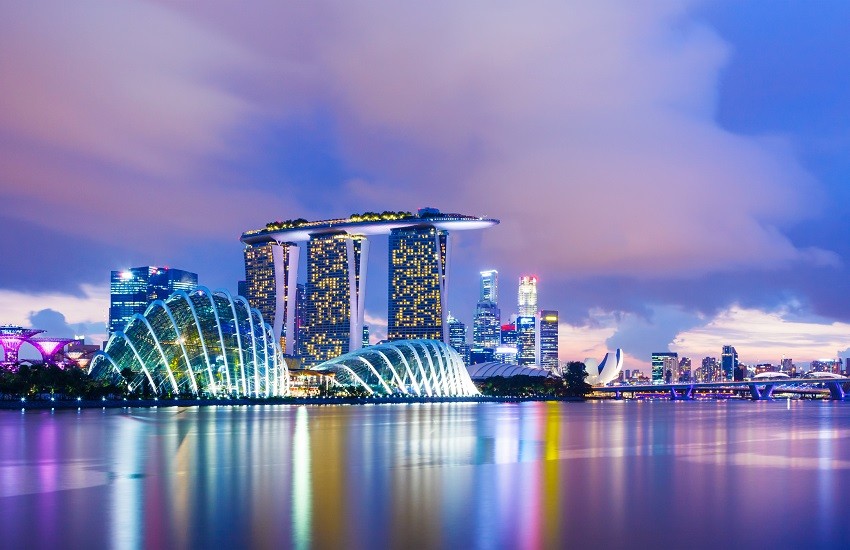
Singapore is all about shiny skyscrapers, great food, lush green spaces, and culture. Marina Bay is the heart of modern Singapore, with its three towers and roof top infinity pool. Another way to soak in the incredible views is on the Singapore Flyer, one of the tallest observation wheels in the world, offering panoramic views of Singapore and beyond. This area is not just about the views though, it’s home to the futuristic Gardens by the Bay, where the Supertree Grove is lit up at night. The ArtScience Museum is another highlight, with its lotus-shaped design and cutting-edge exhibits. In the evenings, head to one of the waterfront restaurants and trendy rooftop bars and don’t miss the nightly ‘Spectra’ light and water show at Marina Bay Sands, where lasers, water jets, and projections dance to music.
For a glimpse of Singapore’s more traditional side, visit Kampong Glam, once the seat of Malay royalty and home to the stunning Sultan Mosque, with its golden dome. This area is perfect for wandering around, with its lively streets, quirky cafes, and bustling markets. Haji Lane is a great spot for vintage finds, while the Malay Heritage Centre offers a deeper understanding of the area’s cultural roots. Just a short walk away, you’ll find Chinatown, with its lively street markets, Chinese temples, and colonial-era architecture.
For a shot of adrenaline, hop on the cable car to Sentosa Island and ride the 450-metre zipline or get lost in the magic of Universal Studios. Finally, no trip to Singapore is quite complete without a pit stop at the famous Raffles Hotel, where you can sip on the iconic Singapore Sling in the hotel’s elegant, colonial surroundings.
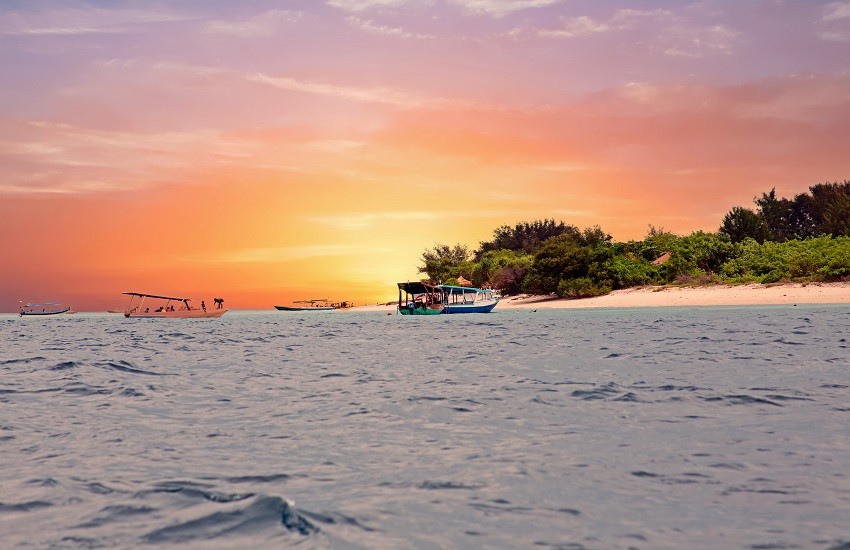
The Gili Islands are the perfect antidote to Bali’s lively beaches. Just a quick boat ride away (approx. 2 hours), these three tranquil islands offer a refreshing escape with no motorised vehicles in sight – only bicycles and horse-drawn carts to get around. Renowned for offering some of the best scuba diving and snorkelling sites in Asia, they are a great place to learn how to dive with ultra clear, warm waters and the opportunity to see turtles.
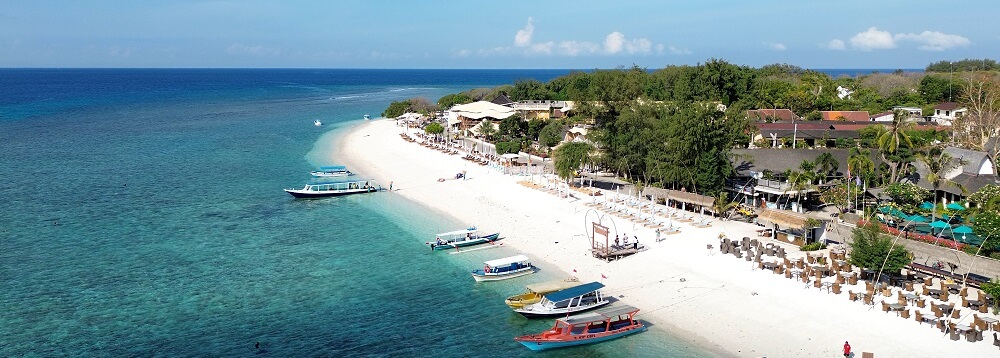
Gili Trawangan, or Gili T as it’s affectionately known, is the liveliest of the lot, boasting beach clubs, parties, and a stunning underwater world. The East Coast is snorkelling paradise, while Sunset Beach on the West is the perfect spot to sip a cocktail and watch the beautiful sunsets that Gili T is famous for. If you’re after a quieter stretch of sand, head to North Beach.
Gili Meno is a romantic hideaway and often known as ‘honeymoon island’. It’s the quietest of the three, with stunning beaches and a slow pace that’s all about reconnecting with nature. Meno Wall on the North is a dream for divers, and the West Coast offers shallow waters ideal for a day of lazing in the sun and snorkelling. The Meno Turtle Sanctuary is a must-visit, where baby turtles are nurtured before being released back into the ocean.
Gili Air is often considered to offer the best of both worlds. Lively enough to offer good restaurants, bars, and activities, but still peaceful and relaxed compared to Gili T. All the beaches here offer something a little different and you really can’t go wrong, but if you’re looking for the classic Gili Air experience, head to East Beach with powder soft white sand and excellent snorkelling straight off the shore with frequent turtle sightings.
Lombok is as famous for its bamboo jungles and waterfalls as it is for its picture-postcard beaches. Getting there from Bali is easy. It’s just a quick 30–40-minute flight or a fast boat ride. It offers an alternative to Bali’s busy beaches where you can immerse yourself in nature.
Senggigi is the island’s main hub on the west coast of Lombok. Here you’ll find a mix of lively beach bars, restaurants, and hotels, all with a relaxed, laid-back vibe. If you’re into water sports, Senggigi is ideal for diving, snorkelling, and surfing. Plus, it’s the perfect starting point for adventures to nearby waterfalls such as Sendang Gile and Tiu Kelep, along with visiting nearby temples and cultural sites. At the end of the day, enjoy watching the sun dip behind the nearby Gili islands.
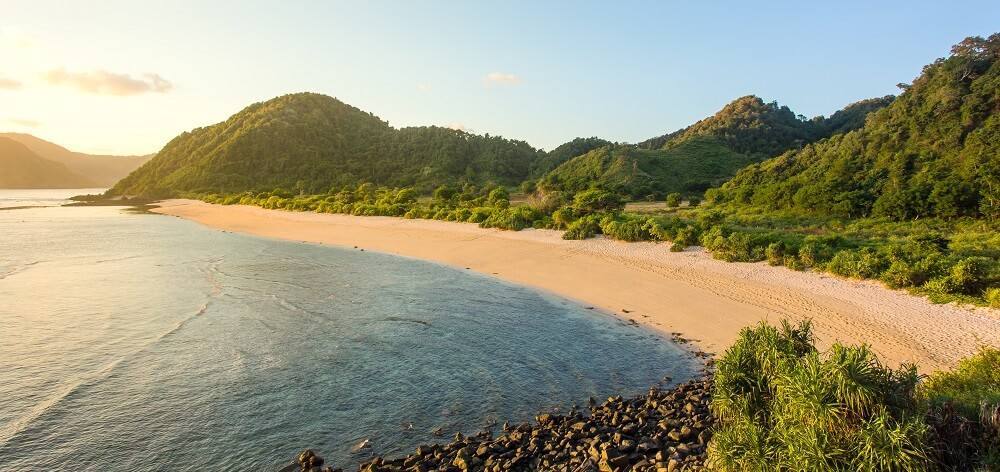
For something a little quieter than Senggigi, head south to Selong Belanak and Tanjung Aan. The beaches offer peaceful waters and far fewer people. Further down on the island’s southern shore, the beaches are equally tranquil.
For outdoors enthusiasts, a trek up Mount Rinjani – Indonesia’s second-highest volcano – is a must-do. It’s a challenging multi-day journey to the summit, but the panoramic views of the crater lake, Segara Anak, surrounded by lush landscapes are worth every step. If the full trek feels a bit daunting, there are shorter walks around the base where you can still soak up the beauty of the area and enjoy natural hot springs along the way.
Lombok’s bamboo jungles are another must-see. These forests are home to huge bamboo groves and walking trails where you can encounter local wildlife such as macaques, wild boars, and various bird species. To truly connect with the island’s roots, visit the rural villages of Selong and Praya. Here you can indulge in a traditional Sasak-style massage or learn how to prepare traditional Lombok dishes.
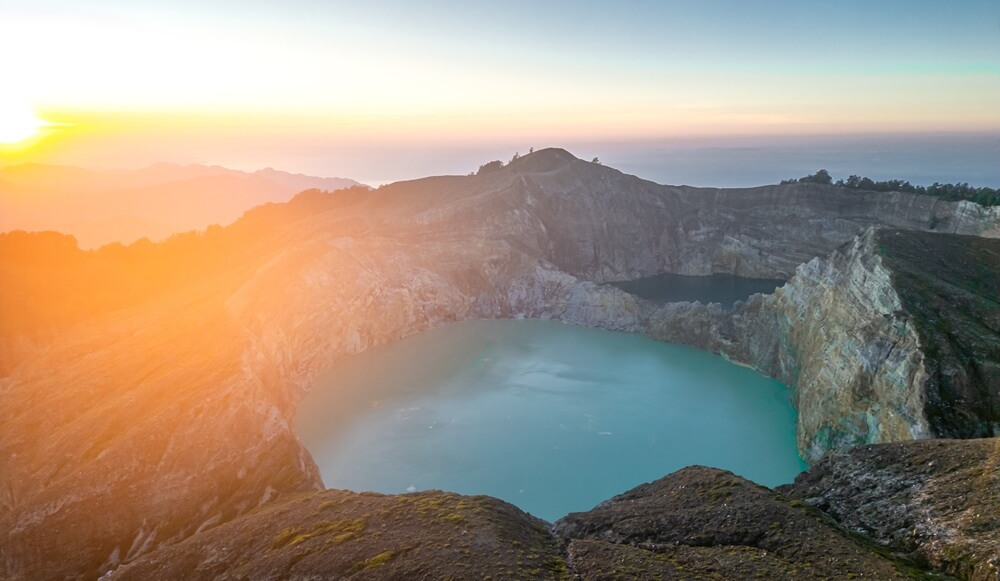
The island of Flores sits in a far-flung corner of Indonesia’s East Nusa Tenggara region, yet it’s only a short flight from Bali. You’ll find spectacular landscapes, rugged mountains, remote villages and a culture that feels worlds away from Bali. The island’s undisputed must-see is Kelimutu, a volcano with three crater lakes that each change colour independently ranging from turquoise and green to deep black, driven by the minerals and volcanic gases beneath the surface.
The best way to explore the rest of the island is to follow the Trans-Flores Highway with a private driver or organised guided tour, allowing you to enjoy the views along the way.
Near Ruteng in the west, the spider-web rice fields at Cancar feature vast circular terraces radiating outward from a central point, laid out by the indigenous Manggarai people over centuries. Also in the west, hidden high in the Manggarai hills, is Wae Rebo, an incredible village that requires a challenging hike to reach. Once you arrive, you’ll be greeted by the locals and the stunning view of cone-shaped cottages set against a dramatic backdrop of forest-covered mountains. Further east, in the Ngada highlands around Bajawa, the villages of Bena, Bela and Gurusina feel genuinely untouched with stone shrines and traditional thatched houses.
Along the coast, the waters around Maumere and Ende are excellent for diving and snorkelling, with quiet beaches to relax on afterwards. And if you’re after something even more off the radar, the 17 Islands Marine Park near Riung boasts beautiful reefs and islands with barely another soul in sight.
Reached by boat from Labuan Bajo on the western coast of Flores, Komodo National Park boasts prehistoric wildlife (aka the Komodo dragon), world-class diving and some of the most dramatic island scenery in Southeast Asia. There are no hotels within this UNESCO-listed National Park, so you can either base yourself in Labuan Bajo on Flores and head out on day trips, or spend two or three nights on a liveaboard on a traditional wooden phinisi boat, anchoring in quiet bays between islands. The park covers around 30 islands in total, with Komodo, Rinca and Padar being the three main ones. Booking is essential as spontaneous visits are no longer possible.
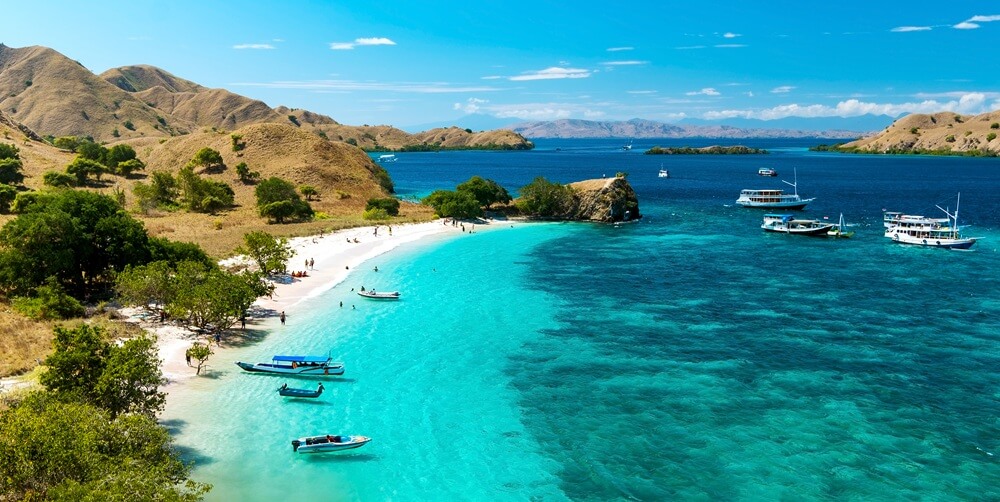
The dragons are the obvious highlight of Komodo. These world’s largest living lizards can stretch up to three metres long, and coming face to face with one is a truly incredible experience, making you feel like you’re stepping into your own Jurassic world. You’ll be able to spot them on guided walks with rangers on both Komodo and Rinca islands.
Padar Island, meanwhile, is all about the views. Take a short, steep hike to enjoy a spectacular panorama of three crescent-shaped bays, each with differently coloured sand. Then head to Pink Beach (pictured above) afterwards for a swim and a snorkel.
Komodo National Park isn’t all about land-based activities, though. There’s lots to explore underwater. Manta Point is great for spotting manta rays, Kanawa Island and Taka Makassar have stunning coral gardens, and the dive sites at Castle Rock and Crystal Rock are some of the best in the country. You can also see turtles, reef sharks and dolphins.
Kalong Island at dusk is another great experience, when millions of fruit bats fly off into the sky in a huge dark cloud.
Sitting to the south of Flores, Sumba is larger and quieter and has a real sense that you’re discovering a well-kept secret. It delivers on both fronts with ancient villages and dramatic landscapes on one hand, and some of the most beautiful and empty beaches in Indonesia on the other. Recently named by Tatler Travel as one of the top destinations to visit in 2026, it feels genuinely authentic and largely undiscovered.
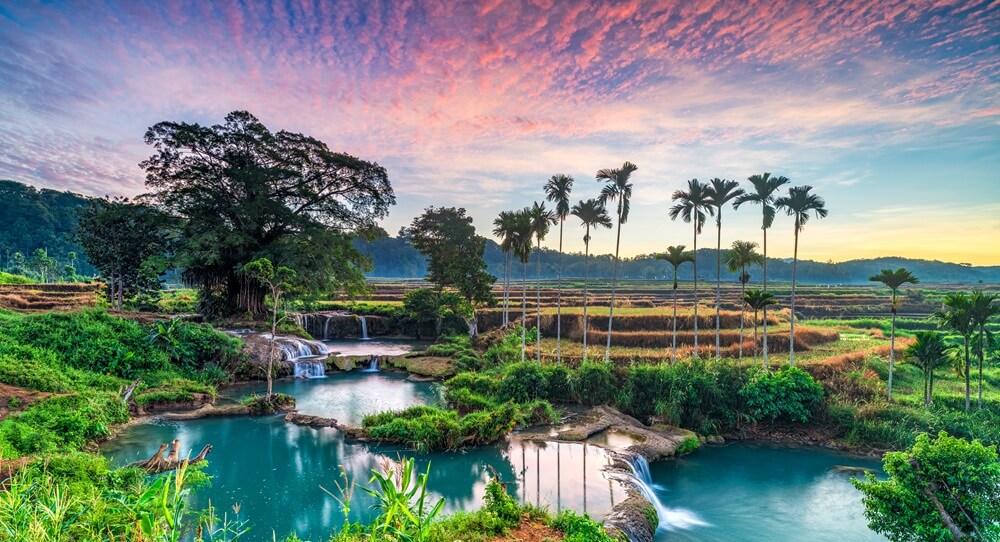
In the west of the island, the beach near Nihiwatu is a gorgeous bay of white sand with excellent surfing and dramatic rock formations. Further along, Mandorak offers clear water and good snorkelling, while Weekuri Lagoon is a natural saltwater pool tucked behind limestone rocks and is perfect for a refreshing dip. On the East Coast, Walakiri Beach is famous for its shallow waters and its distinctive mangrove trees that create an almost surreal coastal landscape, especially at low tide.
Heading inland, the villages on Sumba are unlike anywhere else in Indonesia, with tall thatched houses set around ancient stone tombs. Local life on Sumba very much revolves around ancestors, with ceremonies and rituals to daily offerings. The most elaborate of these is the Pasola festival, held in February and March, which involves a ritual jousting event on horseback.
For breath-taking views across rolling savanna, head to Wairinding Hill at sunrise, and the waterfalls at Lapopu are also a must-visit for a splash of natural beauty and a refreshing dip.
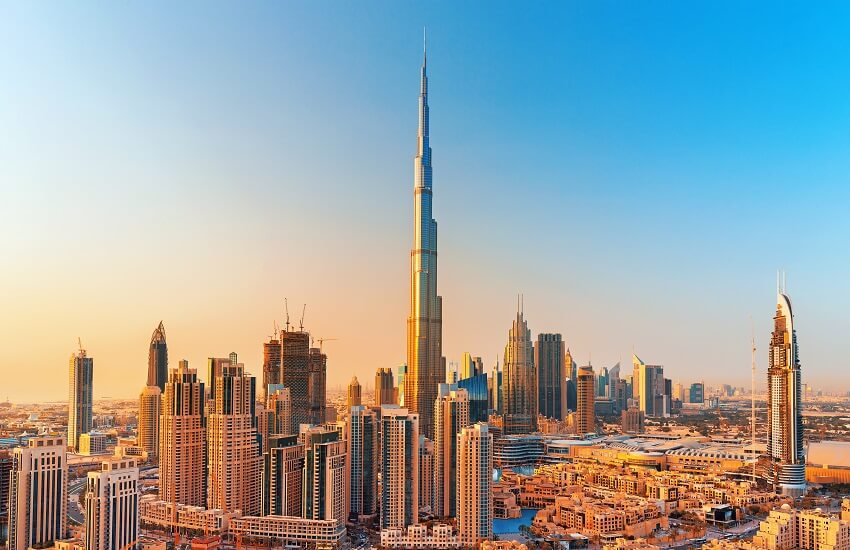
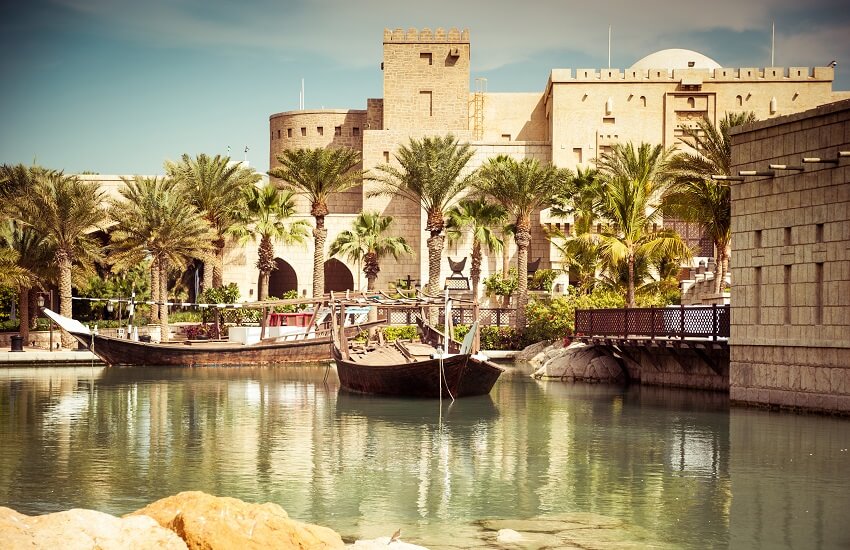
Dubai makes a fantastic stopover and is a good halfway point for those looking to break up the long flight to the Island of the Gods. In recent years, Dubai has become the go-to destination for those looking for glamour, high-end hotels, fine dining, luxury shopping and a touch of excitement.
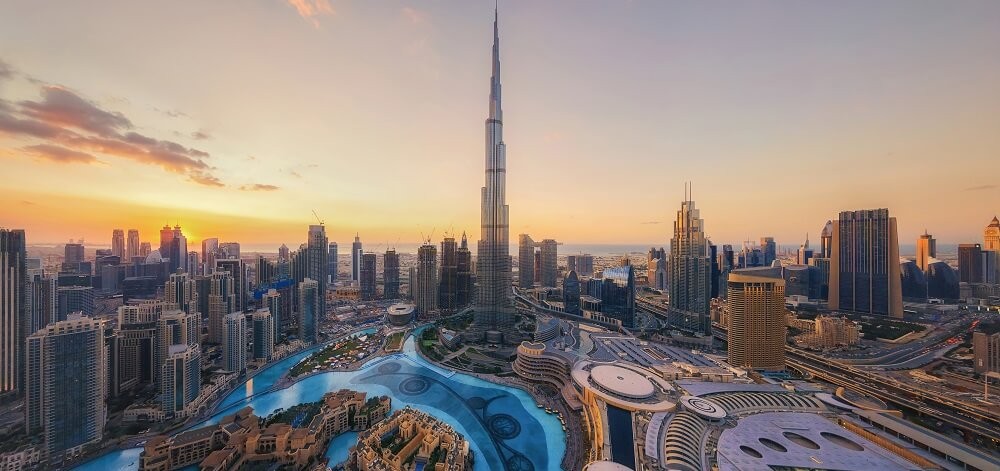
At the heart of the city is the Burj Khalifa, currently the tallest building in the world which houses the 5-star Armani Hotel, which is often referred to as a ‘7-star hotel’ due to its exceptional luxury and high-end service. Even if you’re not staying at the hotel, you can enjoy the jaw-dropping views of the city and beyond on the observation deck. Just below the Burj Khalifa, is the Dubai Fountain, which stretches across the man-made Burj Khalifa Lake where you can watch daily water shows. Nearby, you’ll find The Dubai Mall, one of the largest shopping malls in the world, with a huge choice of shops, restaurants, an indoor ice rink and aquarium. For a taste of high-end dining and luxury, Souk Al Bahar is also just a short walk away.
For a day spent relaxing, head to one of Dubai’s many beach clubs. For brunch, Dubai is the place to be. It’s renowned for its extravagant weekend brunches, offering endless buffets accompanied by champagne.
For a spot of adventure, head out on a desert safari for dune bashing, camel rides, or even dine under the stars in a Bedouin-style camp. There are also lots of family friendly parks such as the water park ‘Aquaventure’ and ‘Motiongate’, which includes DreamWorks.
While Dubai is often associated with modern glamour, its cultural side has been evolving in recent years, offering visitors a deeper understanding of its traditional heritage. To experience some of the history, wander through the narrow lanes and past the wind towers of Al Fahidi. Also visit the Dubai Museum housed in a 200-year-old fort to learn about the city’s transformation from fishing village to global city. Another great thing to do is to hop on a traditional abra boat to cross the Creek and experience the lively markets of Deira, such as the Gold Souk and Spice Souk. Back on the modern side of the Creek, the Dubai Creek Harbour development (which is still under construction) will include the Dubai Creek Tower, which is set to surpass the Burj Khalifa as the tallest building in the world.
Feeling inspired? Whether you’re looking for a simple twin centre combining Bali with Singapore, or a more adventurous itinerary taking in several Indonesian islands, our experts can help create the perfect Bali multi centre holiday tailored entirely to you. Get in touch with the eShores team to start planning your trip.
For Bali multi-centre holidays, popular combinations include nearby islands and exciting stopovers. Travel from Bali to Lombok or the Gili Islands for relaxed beach escapes, or venture further with a trip from Bali to Flores. Many travellers choose flights to Bali with a stopover in Singapore so they can explore there too.
Bali is well-connected to several nearby countries, making it ideal for multi-centre holidays. Singapore is a top choice, alongside Malaysia and Thailand. With eShores, you can also combine Bali with Indonesian islands via routes such as Bali to Lombok.
Inspired by the guide? We’ve handpicked a few holidays that bring it to life—perfect for turning travel ideas into reality.