 01706 753 636


Thinking of a city break in Lisbon or using it as the starting point for a wider Portugal multi centre itinerary or European adventure? Few cities are as easy to fall in love with as Lisbon, with its iconic trams, brilliant food, spectacular viewpoints, fascinating history and a nightlife scene that goes well into the small hours. Here’s everything you need to know to make the most of it…
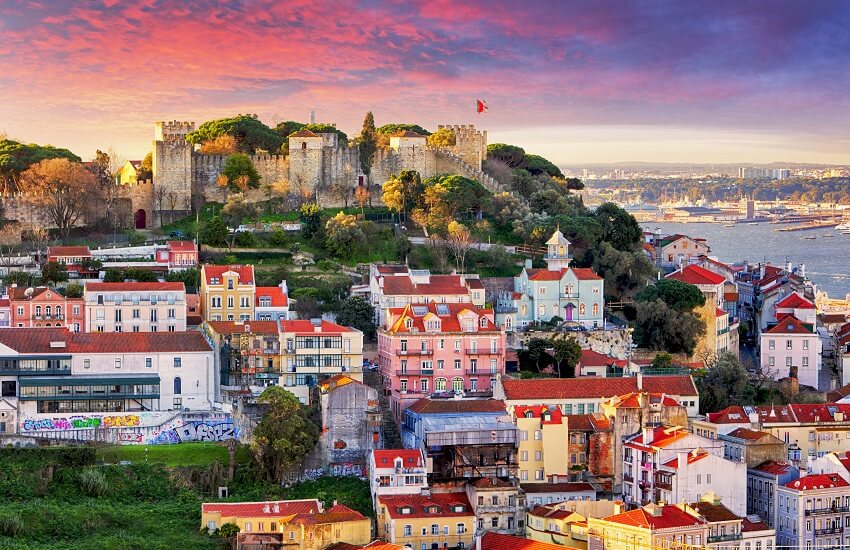
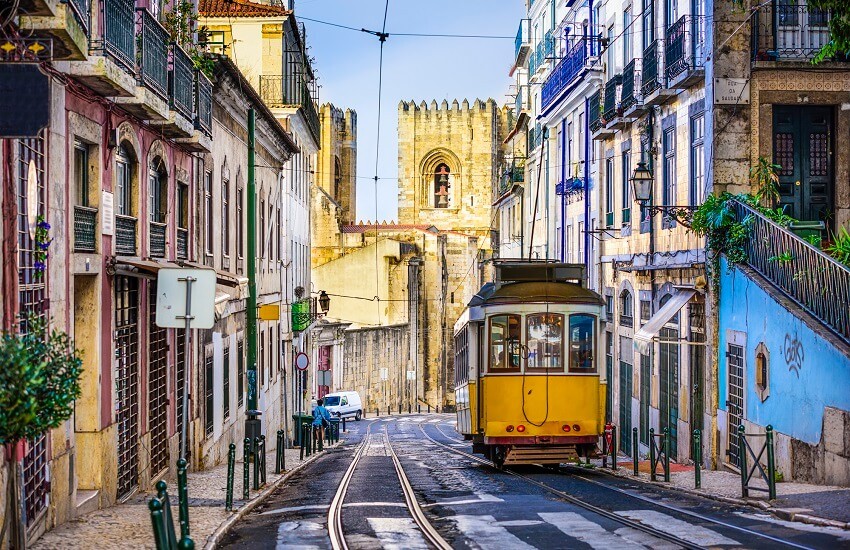
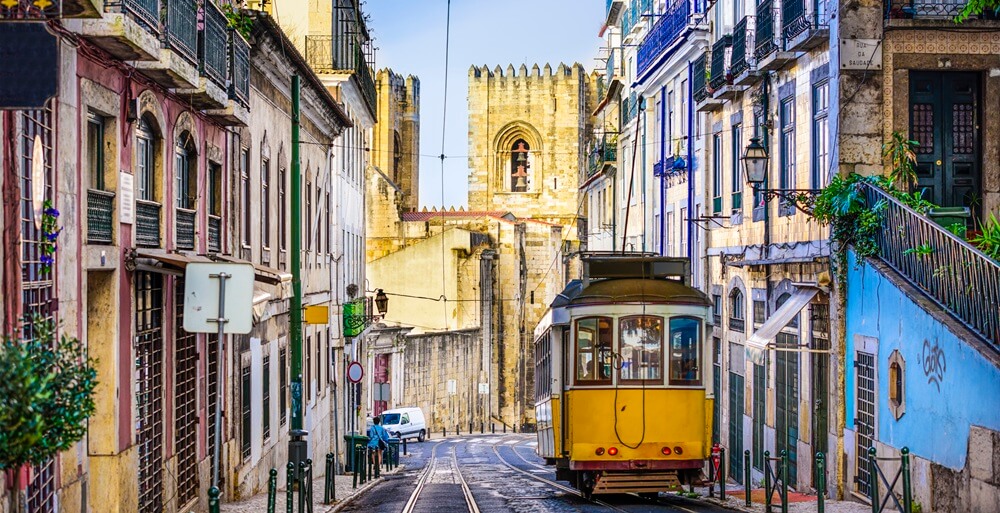
Alfama is the city’s oldest quarter, and the best thing you can do here is simply wander and soak up the sights. You’ll find medieval alleyways, balconies draped with bougainvillaea, and ancient churches. It’s home to the Lisbon Cathedral (Sé de Lisboa), a magnificent Romanesque structure which was built in 1147. Its iconic twin towers are arguably one of the city’s most recognisable sights. Head uphill to the Castelo de São Jorge, the Moorish hilltop fortress whose ramparts offer fabulous views over the terracotta rooftops and the Tagus river below.
On Tuesday and Saturday mornings, the Feira da Ladra flea market spills out across the nearby Campo de Santa Clara, and it’s great for picking up vintage knick-knacks, old azulejo tiles and souvenirs.
Baixa is the commercial heart of the city. Rua Augusta, Baixa’s pedestrianised main street, is lined with shops and street performers and leads south to the Praça do Comércio, a large riverside square that once housed the Royal Palace.
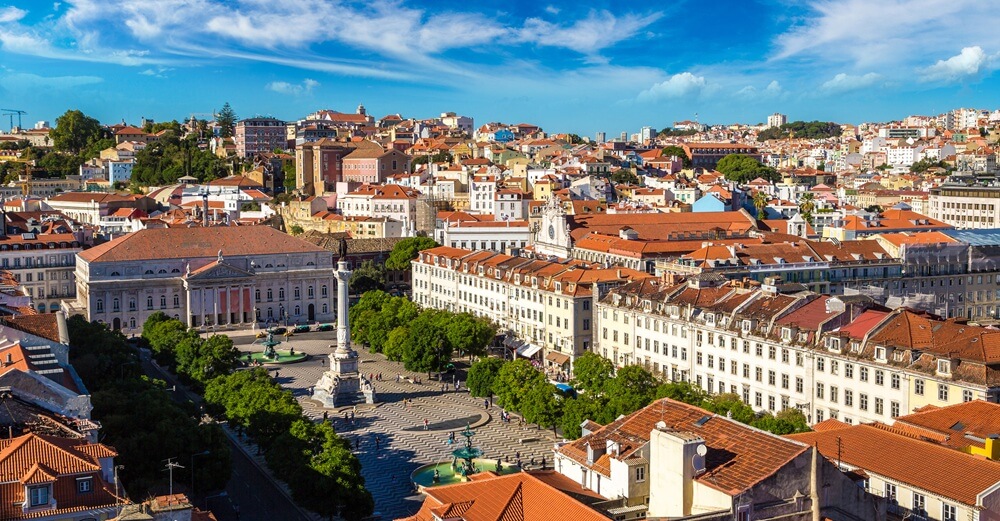
Stop for a coffee or an ice cream and watch the world go by whilst taking in the sweeping views across the Tagus.
Uphill from Baixa, and quite different in character, is Chiado. Chiado is refined, artistic and full of places to explore. It’s home to Livraria Bertrand on Rua Garrett, the world’s oldest bookshop. It’s one of our favourite places to visit in the city, and even if you’re not an avid reader, it’s worth a visit just to soak up the atmosphere with floor-to-ceiling shelves, a lovely café at the back and a wonderfully peaceful feel.
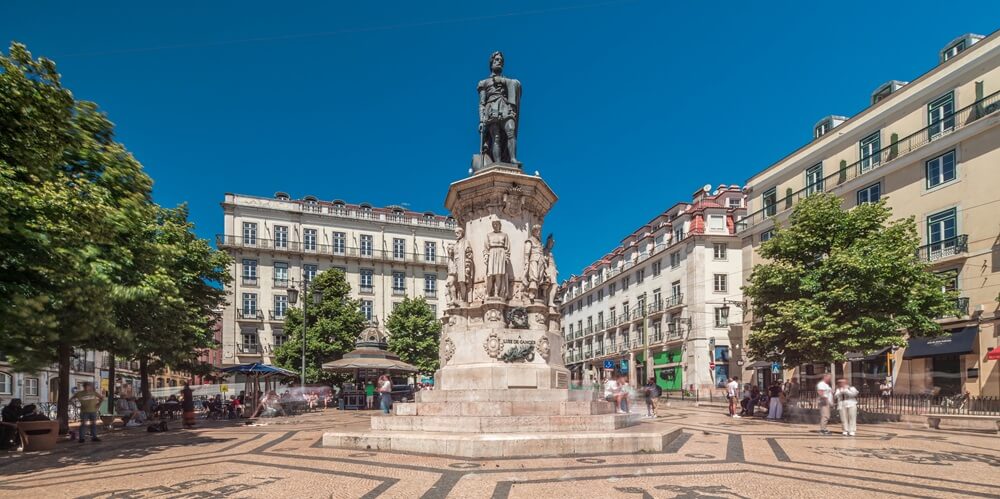
The surrounding streets are full of little boutiques and pavement cafés. While you’re here, make sure you also visit the Convento do Carmo, a beautiful Gothic convent whose roof was destroyed in the 1755 earthquake, leaving its stone arches open to the sky. The small archaeological museum inside is also well worth a look.
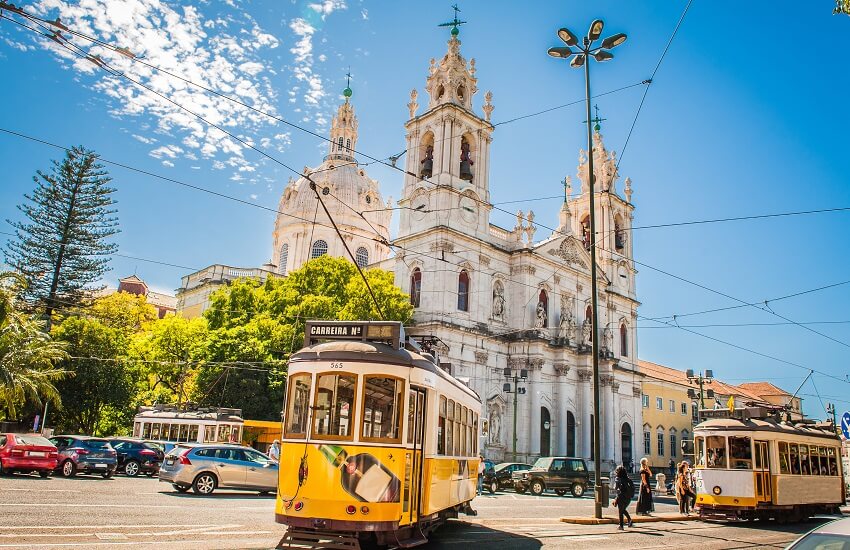
You can’t come to Lisbon without hopping on one of its famous yellow trams – or at least having your picture taken next to one! The famous Tram 28 takes you through some of the city’s most beautiful streets, passing Alfama, the Sé Cathedral, Chiado and Graça.
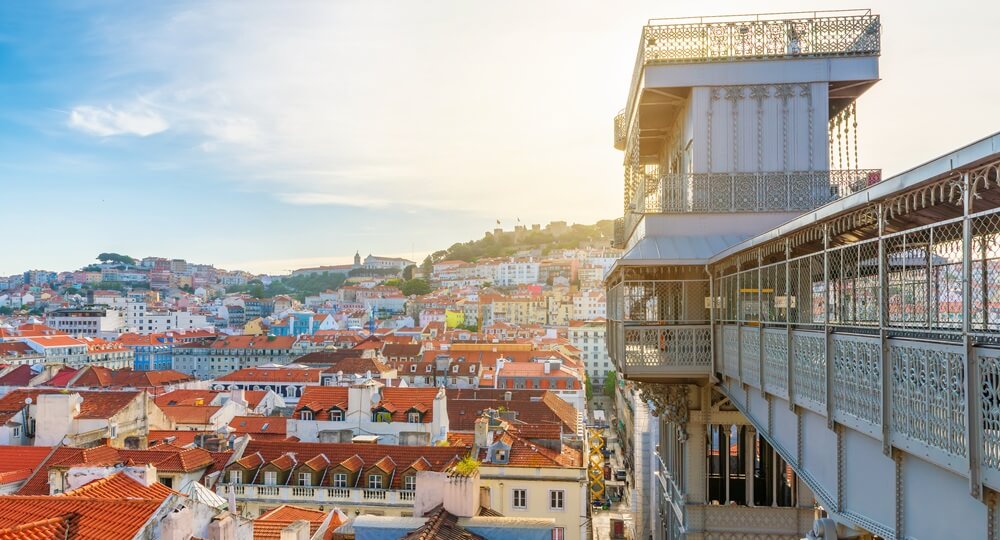
For something a bit different, the Elevador de Santa Justa (pictured above) is an ornate iron lift built in the early 1900s that takes you from the Baixa up to the level of Chiado. The viewing platform at the top looks directly over the ruined arches of the Convento do Carmo. There are also three funiculars in the city: the Ascensor da Glória, Ascensor da Bica and Ascensor do Lavra, each taking you up the city’s steep hillside streets.
Bairro Alto was the first quarter built outside Lisbon’s medieval city walls in the 16th century, but it still has lots of charm. In the daytime, its narrow streets, colourful buildings, and independent cafés give the area a distinctly bohemian and artistic feel. But it’s at night when the area truly comes alive. Hundreds of tiny bars spill out onto the cobbled streets, creating a lovely, warm and welcoming atmosphere where you’ll find a mix of locals and tourists enjoying drinks, traditional petiscos (small tapas), and the sound of Portugal’s traditional fado music that drifts through the lanes.
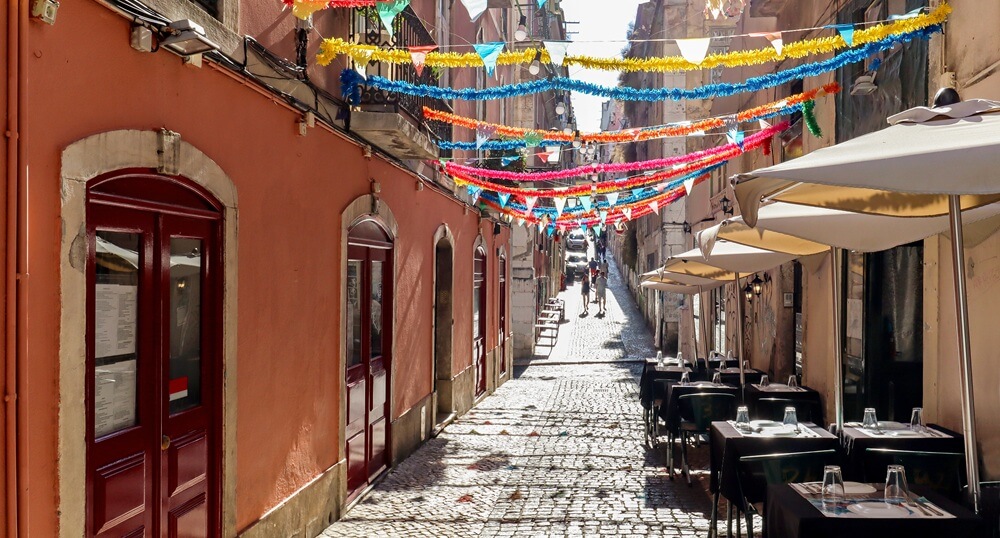
Just below Bairro Alto, the Cais do Sodré waterfront area is home to the Pink Street (Rua Nova do Carvalho). It was once the city’s red-light district, but is now painted a bright bubblegum pink and lined with bars and music venues.
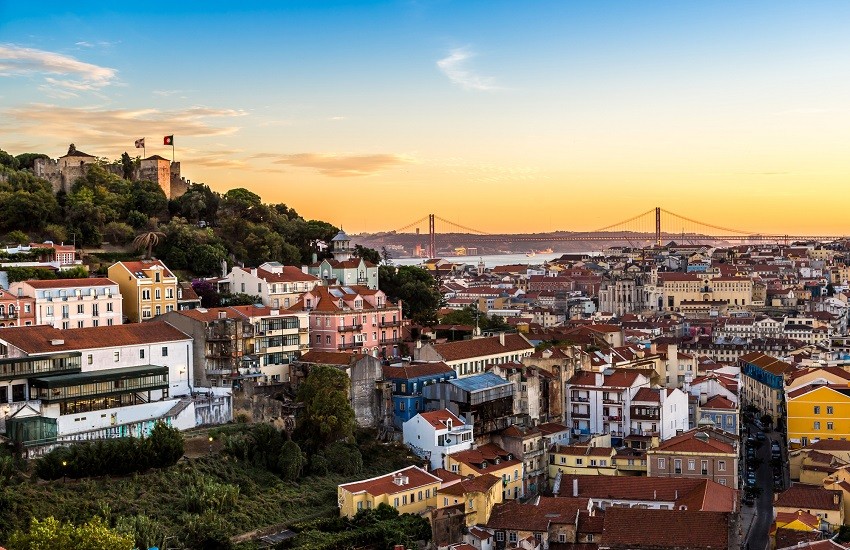
Built on seven hills, it’s no surprise that one of the great joys of Lisbon is its views (or ‘miradouros’). They are free to visit, dotted across the city, and absolutely spectacular at the right time of day. The Miradouro da Senhora do Monte (pictured below) is the highest and one of the best, particularly at sunset, with a view that takes in the castle, the river and what feels like the whole city spread out below you.
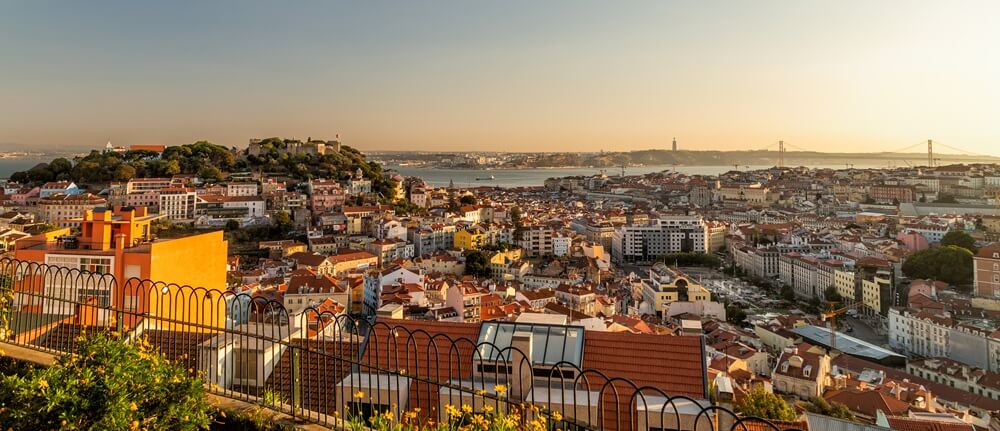
A short walk away, the Miradouro da Graça has a more relaxed, local feel and is also wonderful at sunset. In Alfama, the Miradouro de Santa Luzia is the most romantic, framed with bougainvillaea and decorative azulejo tile panels. Miradouro de São Pedro de Alcântara in Bairro Alto is also a great spot. Although it doesn’t catch the setting sun directly, at dusk, the fading light illuminates the castle on the opposite hill in golden light, which is almost as beautiful.
Lisbon has one of the most exciting food scenes in Europe, but if you only eat one traditional dish while you’re here, it has to be a ‘pastel de nata’. These warm, flaky custard tarts dusted with cinnamon are utterly irresistible and can be found at almost every bakery across the city. For something more substantial, the Time Out Market at Cais do Sodré is great. It hosts some of Lisbon’s best chefs and producers under one roof and is ideal for a long, leisurely lunch. Lisbon is also a paradise for seafood lovers, thanks to its location next to the Atlantic and the Tagus River. From small traditional tascas to elegant waterfront restaurants, fresh fish and shellfish are at the heart of the city’s cuisine, with bacalhau (salt cod) and freshly grilled sardines two of the favourites.
When it comes to drinks, make sure you try ginjinha, Lisbon’s famous sour cherry liqueur.
Central Lisbon has enough to keep most people occupied, but if you’re here for a longer period of time, some day trips are well worth the short journey out of the city.
Belém is just a 30-minute tram ride west of the centre and is where Portugal’s Age of Discoveries set sail. The main highlight here is the Jerónimos Monastery. This stunning UNESCO-listed structure has one of the most breathtaking cloisters in Portugal. Across the road from the monastery is Pastéis de Belém, which has been serving famous custard tarts from a closely guarded secret recipe since 1837. It’s also a short walk along the riverfront to the Belém Tower (Torre de Belém), the fortress that once guarded the harbour entrance.
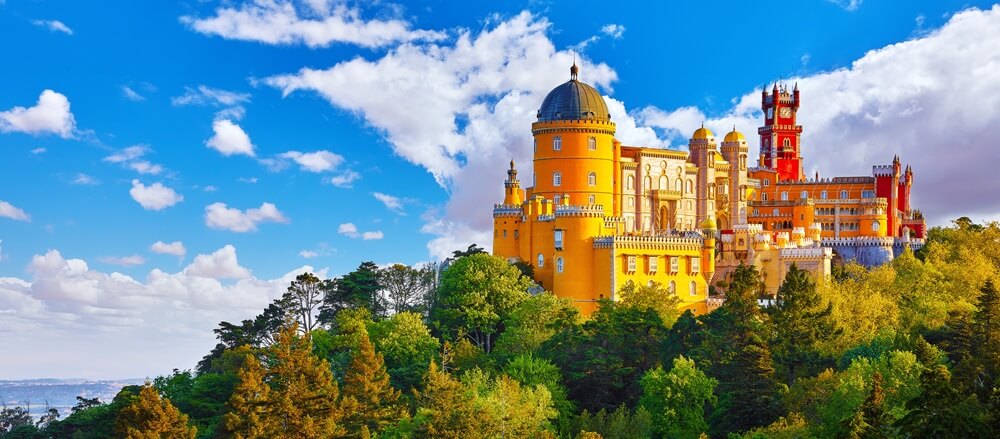
Sintra (pictured above), just 40 minutes by train from Rossio station, feels like you’ve stepped into your very own fairytale with forested hills dotted with extraordinary palaces built for Portuguese royalty and aristocrats. And Cascais is an elegant coastal town with golden beaches, a pretty marina and a laid-back feel that makes it the perfect afternoon escape from the city.
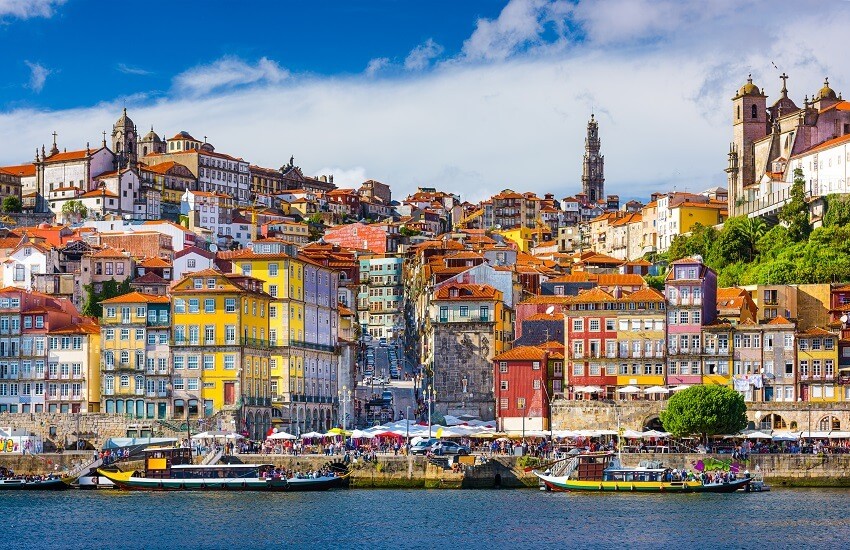
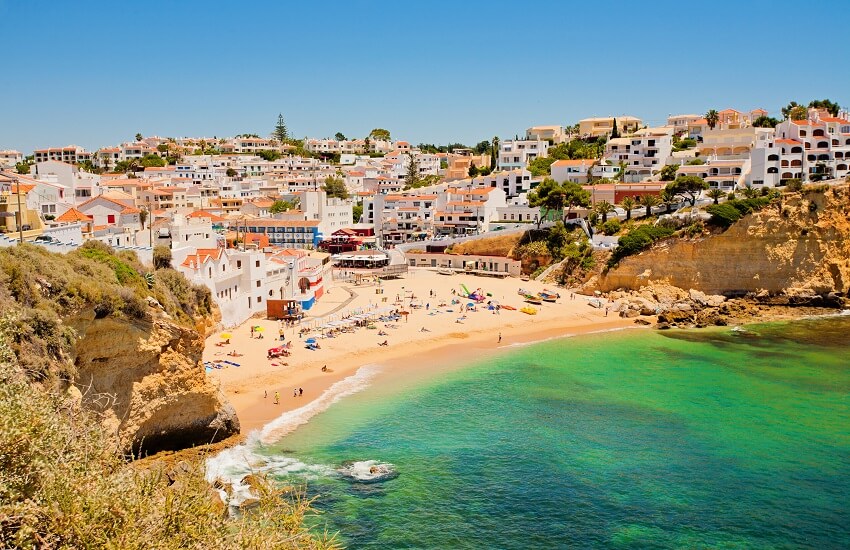
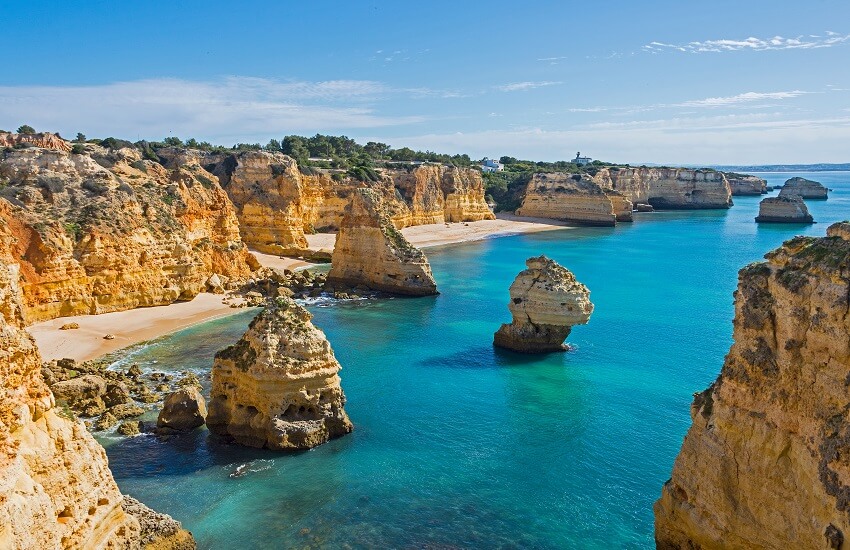
Lisbon is great on its own, but combining it with Porto and the Douro Valley, or pairing it with the golden beaches of the Algarve or beyond offers so much more. Get in touch with our team and we can help you design your own Portuguese adventure.
Inspired by the guide? We’ve handpicked a few holidays that bring it to life—perfect for turning travel ideas into reality.