
Share this article:


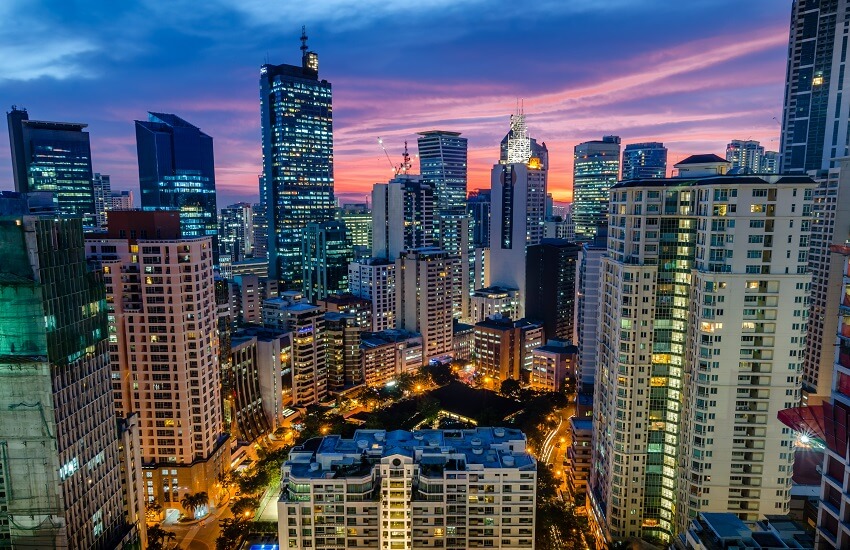
You may think of Manila as simply somewhere to land before heading straight to the white-sand beaches of Palawan, Boracay or Cebu. However, the Philippines’ capital city deserves much more than a quick stopover at an airport hotel, and it’s definitely one of the highlights of the Philippines. It is notoriously busy, with crazy traffic, but once you get under its skin, you’ll find a warm, lively city with loads of history, some brilliant free museums and one of the best street-food scenes in Asia.
The 10 best things to do in Manila
- Explore Intramuros and Fort Santiago, Manila’s historic walled city
- Visit San Agustin Church and its stunning painted ceiling
- Explore three free museums at the National Museum Complex
- Tour Casa Manila, a 19th-century Spanish colonial house
- Try hopia and dumplings in Binondo, the world’s oldest Chinatown
- Watch the sunset along Manila Bay on Roxas Boulevard
- Take the Pasig River Ferry past Malacañang Palace
- See the Changing of the Guard at Rizal Park
- Go for cocktails in Poblacion’s speakeasies
- Take a day trip to Corregidor
Delving into the best things to do in Manila
Explore Intramuros and Fort Santiago, Manila’s historic walled city
There’s no better place to start than where Manila itself began. Intramuros, meaning ‘within the walls’, was built by the Spanish in the late 1500s, and is leafy, peaceful and full of cobbled streets. Wander along the ramparts, admire the grand Manila Cathedral, take a ride in a ‘kalesa’ (a traditional horse-drawn carriage) or join a bamboo bike tour. When you need a rest, head to Plaza San Luis, opposite San Agustin Church, where restored colonial-style houses are home to cafés and bars, perfect for an iced coffee or a cold Filipino craft beer.
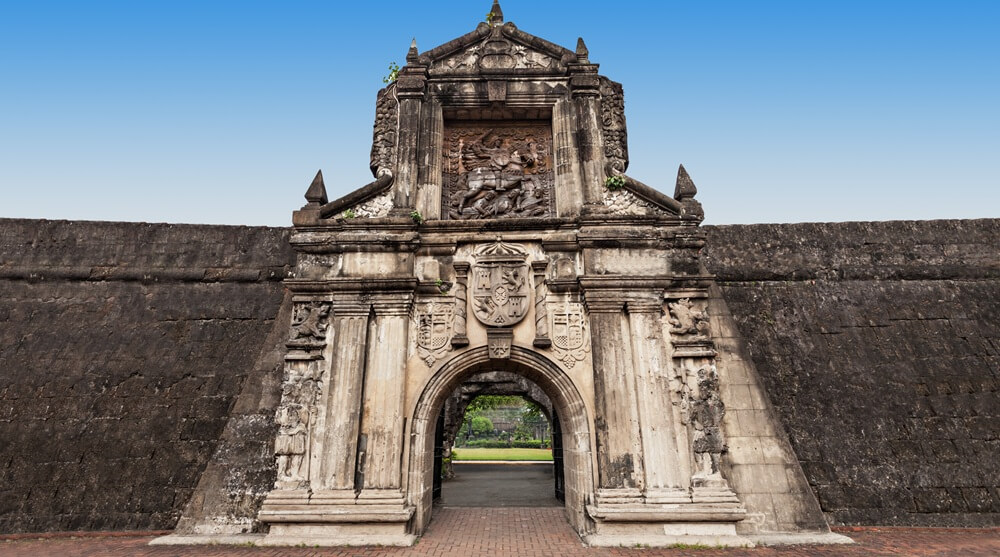
At the northern tip of the walls, Fort Santiago guards the mouth of the Pasig River. National hero José Rizal spent his final days here before his execution in 1896, and a small museum tells his story. Look down as you walk, and you’ll spot bronze footprints marking his last steps, then climb onto the old walls for lovely river views.
Visit San Agustin Church and its stunning painted ceiling
San Agustin is the oldest stone church in the Philippines and one of four baroque churches in the country with UNESCO World Heritage status.
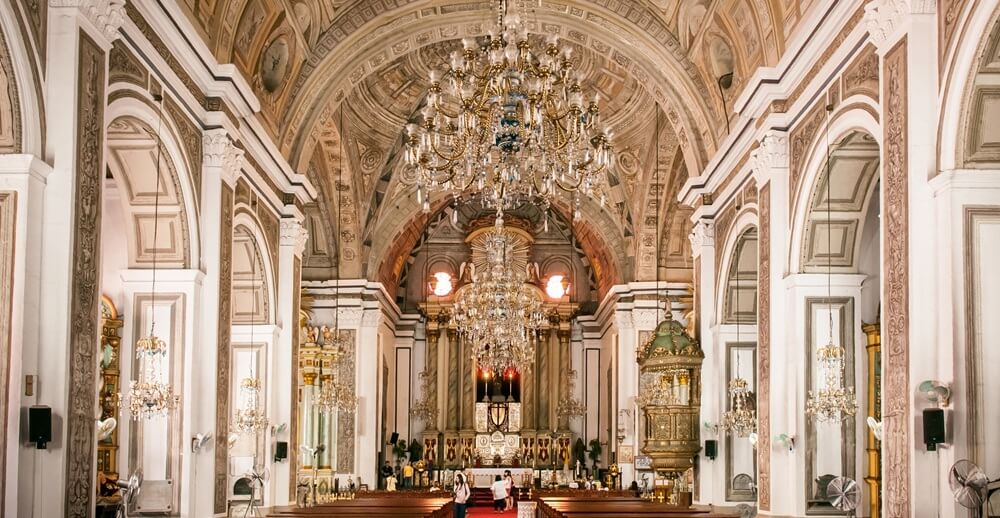
From the outside, it looks fairly plain, but once you step inside, past the pair of Chinese stone lions guarding the entrance, you’ll get a real wow moment. The ceiling looks like it’s covered in intricate carvings, but it’s actually a cleverly painted illusion. Look out for the ornate gilded altar and the grand pulpit too. Miguel López de Legazpi, the Spanish conquistador who founded Manila, is also buried here. It’s a hugely popular wedding venue, so don’t be surprised if you spot a bride or two, although it does mean access can sometimes be limited.
Make sure you also visit the old monastery next door, which is now a museum. It’s packed with religious art, antique furniture and colonial treasures, and is often lovely and quiet.
Explore three free museums at the National Museum Complex
Three of Manila’s best museums sit inside the National Museum Complex, and the best bit is that they are completely free to visit. At the National Museum of Fine Arts, you’ll find ‘Spoliarium’, Juan Luna’s enormous, wall-filling painting and one of the country’s most treasured artworks. The Museum of Anthropology is home to the 3,000-year-old Manunggul Jar and treasures from a Spanish galleon that sank in 1600. And at the Museum of Natural History, you can see the skeleton of Lolong, one of the largest crocodiles ever caught.
Tour Casa Manila, a 19th-century Spanish colonial house
Also part of Plaza San Luis, Casa Manila is a recreation of a grand 19th-century townhouse and is a wonderful way of picturing how wealthy Filipino families used to live. You’ll find details such as the sliding capiz-shell windows, which let in light while keeping out the heat, and the elegant ‘sala’ where guests were entertained.
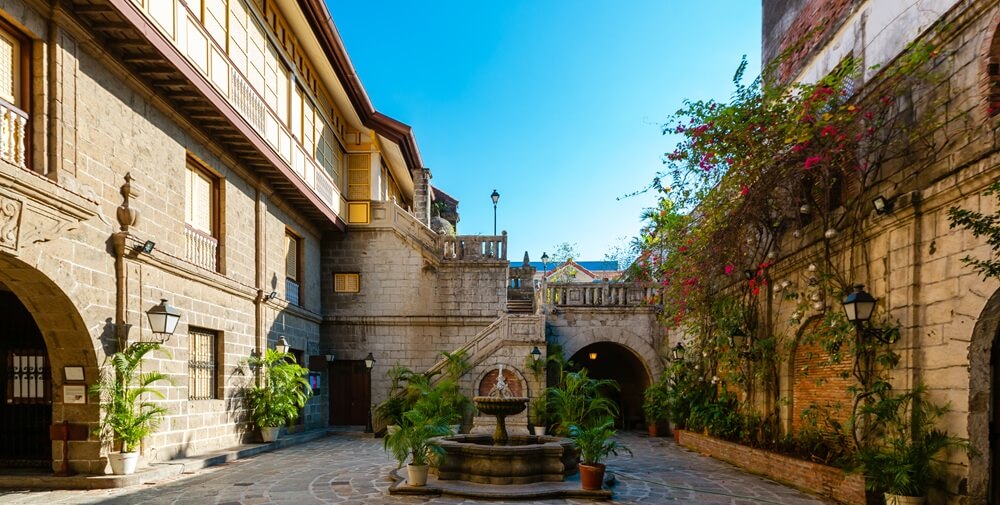
There’s also a period kitchen and bathroom, complete with a slightly unusual two-seater toilet! Opening days can vary, so check before you visit.
Try hopia and dumplings in Binondo, the world’s oldest Chinatown
If you love food, you will be in your element in Binondo. Founded in 1594, it’s thought to be the oldest Chinatown in the world, and is full of bakeries, noodle shops and family-run restaurants.
Must-tries include hopia, a flaky pastry filled with sweet bean or yam, and some freshly made dumplings. Other highlights include the Filipino-Chinese Friendship Arch, the herbal medicine shops along busy Ongpin Street, and Binondo Church with its octagonal bell tower. A guided food walk with a local is the best way to find the tastiest spots.
Watch the sunset along Manila Bay on Roxas Boulevard
Manila Bay is famous for its sunsets, and watching one in Manila is a rite of passage. Head to the promenade on Roxas Boulevard in the late afternoon to find a spot by the sea wall and watch the sky turn all shades of pink, orange and gold as the sun sinks behind the mountains across the bay.
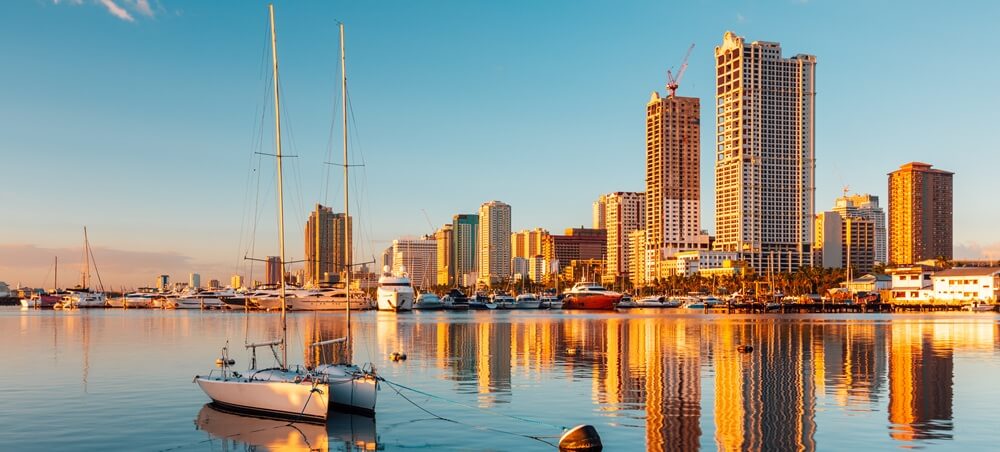
For something more special, enjoy a sundowner at one of the rooftop bars in nearby Malate.
Take the Pasig River Ferry past Malacañang Palace
To skip the traffic and see the city from a completely different angle, hop aboard the Pasig River Ferry, which runs from the old heart of Manila through Makati and on to Pasig. Along the way, you’ll glide under historic bridges and past old warehouses, riverside neighbourhoods and the grounds of Malacañang Palace, the president’s official home.
See the Changing of the Guard at Rizal Park
After some busy sightseeing, you’ll be ready for a rest, and Rizal Park (also known as Luneta) is the perfect spot. The park sits next to the National Museum, and its Chinese and Japanese gardens are particularly peaceful.
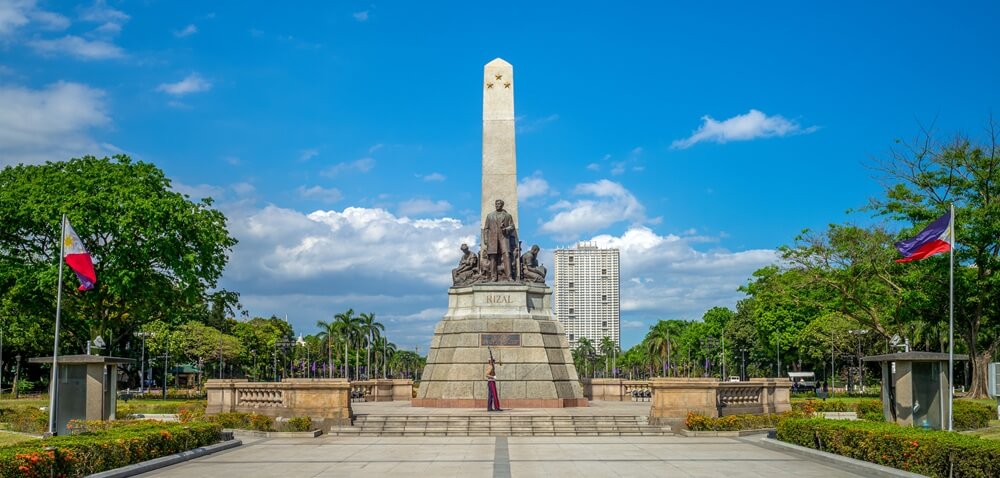
In the middle of the park stands the Rizal Monument, the national hero’s resting place, watched over by ceremonial guards. If you time your visit to coincide with a scheduled ceremony, you might also see the Changing of the Guard or a Silent Drill Exhibition. This display of precision, with perfectly synchronised rifle routines performed without a single spoken command, is really impressive. In front of the monument, look out for the Kilometre Zero marker, from which all distances in the Philippines are measured. Nearby, life-size bronze statues mark the spot where Rizal was executed.
Go for cocktails in Poblacion’s speakeasies
The best place for a night out in Manila is Poblacion in Makati. Its streets come alive with speakeasies hidden behind unmarked doors, craft beer bars and live music. It’s also a great place to try some Filipino street food, such as sizzling sisig. There’s usually a mix of locals and travellers, and a friendly vibe. Plus, the party often carries on into the early hours!
Take a day trip to Corregidor
If you have an extra day in Manila, head to Corregidor Island, especially if you love history. This rocky island at the mouth of Manila Bay was a key fortress during the Second World War. Today, it’s more like an open-air museum, with the ruins of the Mile-Long Barracks, huge gun batteries and moving memorials. Also make sure you see the Malinta Tunnel, where a light-and-sound show brings its wartime story to life. There are plenty of day tours that sail there from Manila, although it’s best to go in the dry season (December to May), as boats can be cancelled in rough weather.
Make Manila part of your Philippines adventure
Manila makes the perfect start to a multi-centre holiday in the Philippines. Spend a couple of days soaking up the culture and food, then fly off to a beach paradise, such as Cebu on our twin centre to Manila and Cebu. Or explore further afield and combine Manila with other fascinating parts of the country such as Puerto Princesa, El Nido and Busuanga / Coron on our Best of the Philippines itinerary.
Get in touch with our team, and we’ll help you create a Philippines holiday that’s just right for you.